

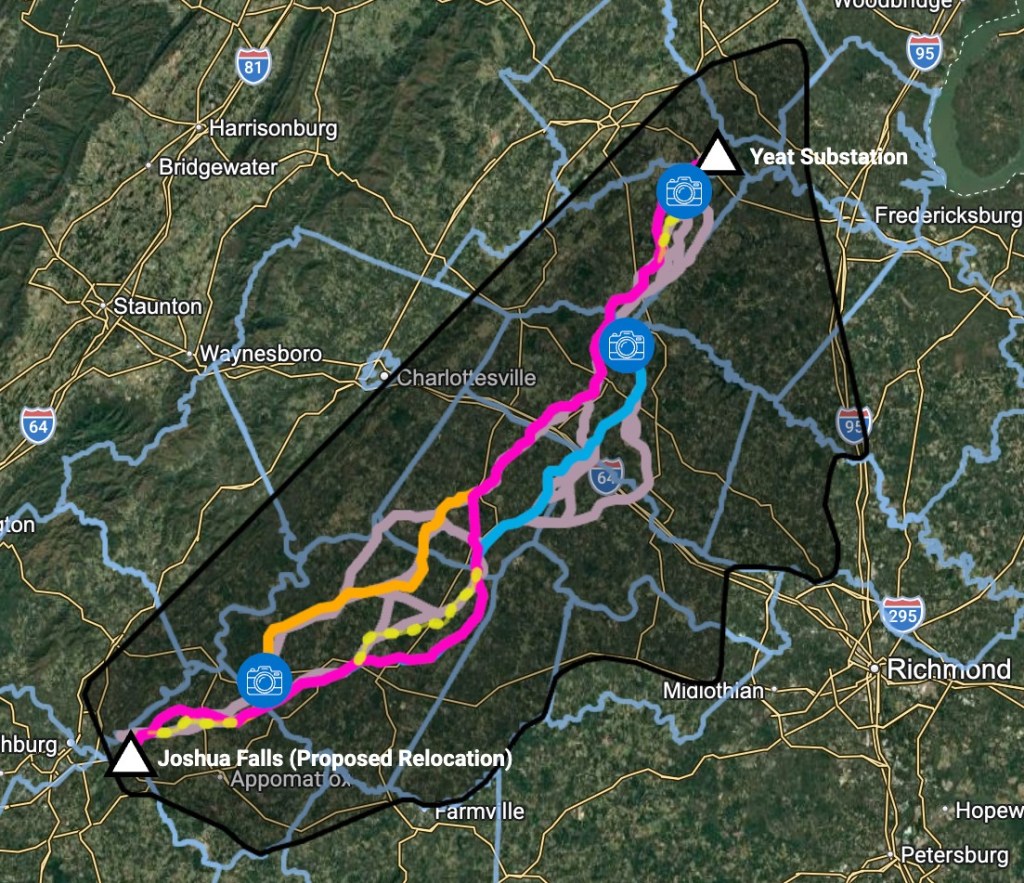
Valley Link has released updated routing maps and a new slate of open houses for a proposed high-voltage transmission line that would cut through more than 100 miles of mostly agricultural and forested land from Campbell to Culpeper County in central Virginia.
Company representatives say the route changes have been implemented in response to community feedback, but some community members say they’re not so sure Valley Link is listening.
Information regarding the project first became available in February, when Valley Link — a partnership between Dominion Energy, Transource and First Energy Transmission — invited the public to an initial series of open houses to offer input on a set of proposed routes for its Joshua Falls to Yeat transmission line. Valley Link representatives have said the 765-kilovolt line is needed to stabilize Virginia’s electric grid amid a sharp rise in demand driven largely by new data centers.
Valley Link says it prefers to secure land via voluntary easements, but will use eminent domain — the seizure of private property for public use by the government without the owner’s consent — as a last resort. Dominion-affiliated projects have demonstrated a willingness to utilize eminent domain for other energy projects in recent years, battling everyone from farmers to funeral home owners in legal disputes across the state, according to reports from ABC News and 13News Now in Norfolk.
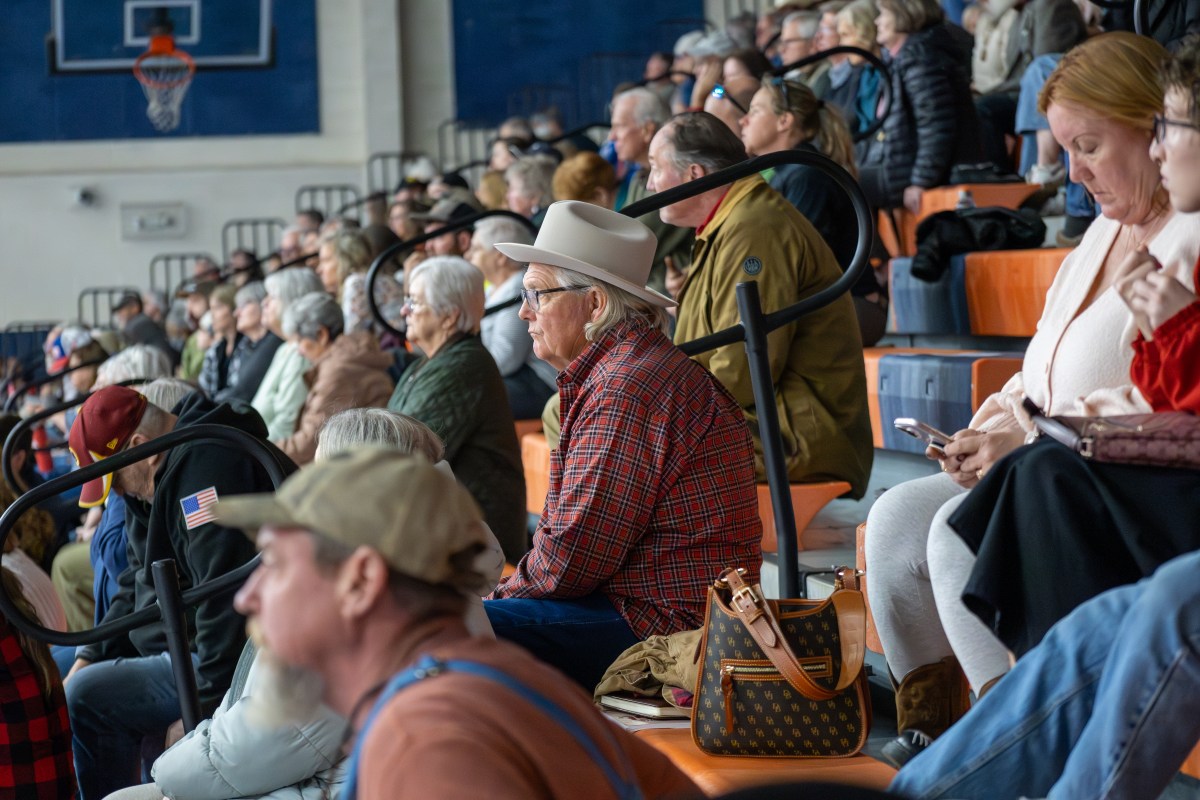
Public response to the project has been huge, with more than 3,400 community members attending the March open houses. In Orange, Louisa and elsewhere, community members shared concerns about the proximity of the line to existing homes and structures, environmental and health impacts, disruption to agricultural operations and historical resources.
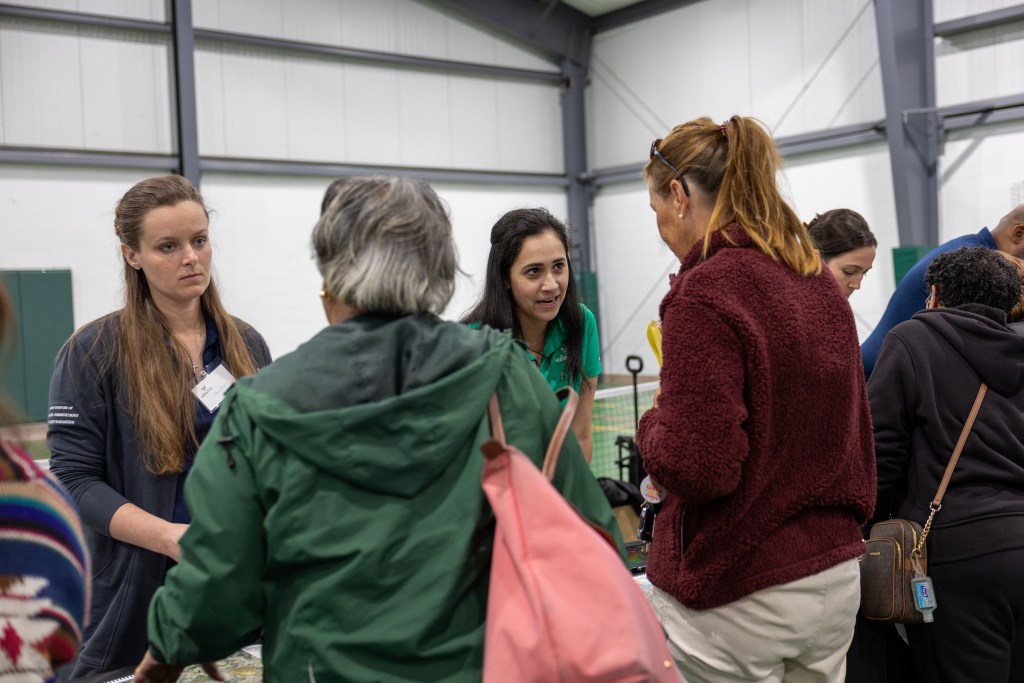
Valley Link pledged to use that feedback, along with comments submitted through their website, emails and other communications with community members, to refine the routes and minimize impact to property owners. In late March, Valley Link released those refined routes on its website, along with the dates for another set of open houses in each county throughout the month of June.
In a statement emailed to Charlottesville Tomorrow, Valley Link said that “The updated Joshua Falls to Yeat routes are the result of months of ongoing engagement with thousands of residents in our communities along the potential route alternatives.”
According to the statement, the revised routes impact fewer than 75 homes, and there are no homes within 150 feet of the routes. Valley Link says it has reviewed approximately 15,000 miles of routing alternatives and more than 2,000 public comments.
However, community members who spoke with Charlottesville Tomorrow expressed exasperation over their attempts to meaningfully engage with Valley Link. They said that when they tried to reach out with concerns and questions, they were met with contradicting statements, technological glitches, and in many cases, silence.
Anna Ahlbin, an Orange County resident, found out in late February that her 6-acre homestead was in the path of the proposed transmission line. Ahlbin attended an open house in March after initially trying to submit a comment on the Valley Link website and getting no response, she said.
The event left Ahlbin even more perplexed. She said that there was “no one there who seemed to actually know anything,” adding that it was also “incredibly confusing as to who you were supposed to speak with if you had actual information to give them.”
At an Orange County Board of Supervisors meeting later that month, Ahlbin said she heard another person talk about their difficulty submitting a comment on the Valley Link website. Ahlbin tried to use the feature again shortly thereafter, hoping to provide information about outdated and missing details like existing structures on Valley Link’s route map.
“When I went to submit another comment, I encountered the exact same difficulties as the woman at the BOS meeting,” she said. “The submit button did nothing, and the comment would not go through.” She emailed Valley Link about the glitch on the website but once again, didn’t hear back.
Ahlbin did eventually get a call from Valley Link representative Rob Richardson in early April after asking District 63 Del. Phillip Scott to intervene on her behalf. However, a recent email left Ahlbin wondering what her efforts had accomplished.

On May 31, Ahlbin finally got an automated confirmation about a comment submitted on the Valley Link website. There was only one problem: the address and phone number listed weren’t hers and appear to be connected to an entirely different homeowner in Louisa County.
“But we’re supposed to trust their expertise to build giant pulsing towers spanning nine counties?” Ahlbin asked.
Benjamin Pennington is the founder of the Preserve Orange Alliance, a nonprofit that seeks to “preserve Orange County’s rural land, historic character, and way of life for future generations,” through community engagement regarding major development projects like the Joshua Falls to Yeat transmission line. One of the tasks that Pennington has taken on in his leadership role is helping other community members, such as elderly neighbors or those who may not have regular access to a computer, navigate the Valley Link website.
Of the approximately 20 residents that Pennington has directly helped to submit comments and emails, he estimated that only about two have received responses.
He added that the design of the website isn’t user-friendly and some features, like a privacy agreement that blurs out the entire section users need to access the comment feature, may be keeping other community members who are less tech-savvy from submitting comments at all.
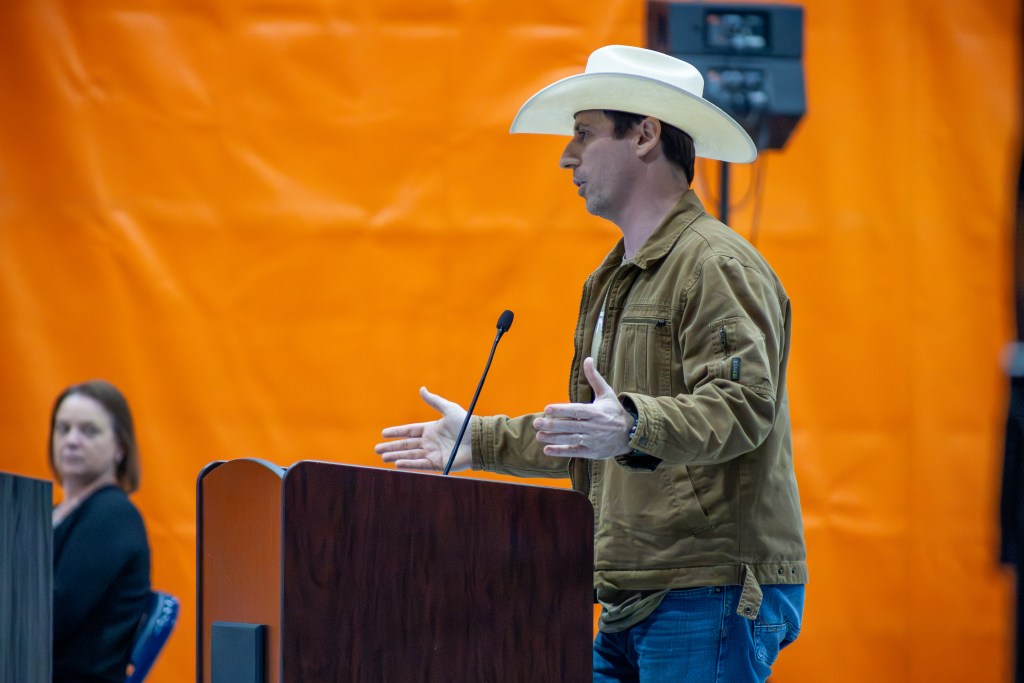
“Dominion is a very wealthy company,” he said. “They have the ability to make something intuitive and get the information out there.”
Pennington himself has sent about a half dozen messages to Valley Link, but said he didn’t get a call until the day after he was featured in an article by The Daily Progress (subscription required).
Now that the revised routes have been released, Pennington has more questions.
One of the original routes from March passed within 200 feet of Pennington’s house. That route has been moved off his property on the revised map but now, one of the other route alternatives could place the transmission line about 700 feet away on the opposite side. Without publicly available information about the reasons behind the route changes, he doesn’t know why that decision was made or if the route will move again.
Other community members have been even less successful in their attempts to reach out to Valley Link. Johannah Willsey of Fluvanna County was one of several community members who said Valley Link never followed up on their inquiries. Willsey sent an email in mid-March and said she never got a response.
“I don’t honestly believe that they are paying attention to resident feedback of any sort,” she said.
Take action
Have you heard back from Valley Link? Let us know.
As Charlottesville Tomorrow continues to cover the Joshua Falls to Yeat transmission line project, we want to hear from community members.
If you’ve submitted a comment on the Valley Link website, sent an email or asked a question during an open house and want to share your experience, send us a note here. Doing so will help us build a more complete picture of how well Valley Link is communicating with residents for future stories. Click here to see a list of Valley Link’s upcoming open houses, scheduled for June 15-June 26.
Carolyn Loveland, like many people who live in the rural communities along the path of the proposed transmission line, doesn’t have reliable cell phone service at home.
Loveland emailed Valley Link three times throughout April, explaining her situation and asking Valley Link to respond via email each time. She said she hasn’t received any emails in response but has gotten two voicemails, which she has to travel off of her property to listen to.
In a series of phone interviews and emails with Charlottesville Tomorrow, Dominion Energy spokesperson and Valley Link representative Craig Carper asserted that Valley Link had “documented interactions” with property owners who had cited communication issues, but declined to answer further questions about specific interactions.

Carper confirmed that Valley Link uses Jambo software to track its communications but was unable to provide details about how the program is being utilized. Jambo’s company website describes the system as “purpose-built software for teams who need to prove they engaged,” with features including prioritizing tasks and generating compliance reports to be submitted to regulatory agencies.
Carper said that Valley Link understands community members’ frustrations but is doing its best to ensure transparency and timely communication given the scale of the project.
“We’ve been engaging with nine counties. It’s a lot,” Carper said. “It’s not a huge team that’s working on it, particularly the people that can speak about the project comprehensively. It’s a handful of people. So, we’re stretched kind of thin and, and we got a lot of work to do.”
When it comes to community members like Lovelend who have limited options for communication, Carper acknowledged that Valley Link must be sensitive to the needs of rural residents, but said that the extensive travel project managers are undertaking can make that difficult.
“When, you know, half or two-thirds of your day is in your car, it’s just so much easier to call,” he said, adding that representatives Rob Richardson and Lane Carr have been “almost living in their cars” going to meetings and visiting impacted properties.
Asked if the Valley Link project is understaffed, Carper said that utilizing a larger pool of employees isn’t feasible within the project’s budget.
“All of this has to get approved and paid for,” he said. “And the SCC (State Corporation Commission) only approves so much in terms of what resources we have. So, you know, if our staff was too large, there’d be questions about costs.”
Bryan Nicol, Chair of the Orange County Board of Supervisors, said in a phone interview on June 3 that he’s been hearing from constituents about communication problems similar to those shared with Charlottesville Tomorrow.
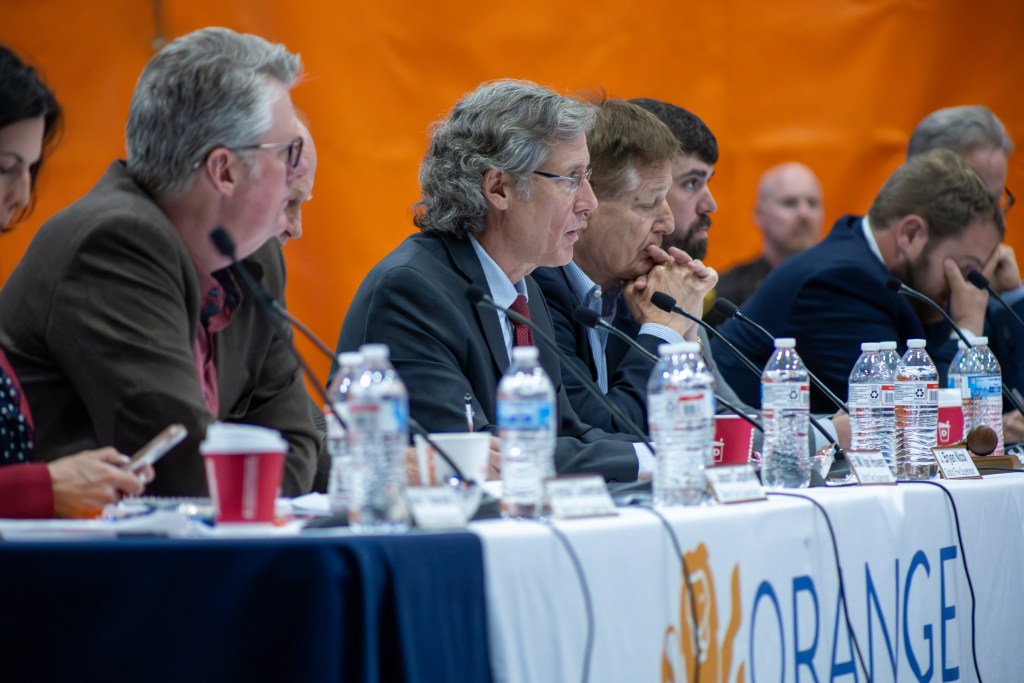
“It’s mind boggling that they can show up with 60 or 70 people at an open house meeting, yet they can’t answer a simple email or return a simple call,” Nicol said. “I’ve heard time and time again, it’s like you send an email and it goes into some folder, never to be seen again.”
Asked about Valley Link’s assertion that they are responding to feedback as quickly as possible while working with a limited number of staff, Nicol responded that he was “speechless.”
“If that’s the real issue, then that says to me that they should slow this thing down,” he said. “They should start over and do it right, and take the amount of time that needs to be taken to respond to citizens and to be able to present that information, so that the ones that are acutely and directly impacted can weigh in on this process.”
Carper said that Valley Link isn’t rushing to get the project done and has already moved the estimated timeframe to submit its SCC application from September to later this fall.
“We’re sticking to the process and, if anything, we pushed things back a couple times, as we saw with the open houses that were pushed back to give routing more time, because we’re trying to do this right,” Carper said.
But taking the time to incorporate public feedback must be balanced with the “urgency of the demand” for power in Virginia, Carper said.
“As soon as this is built, it’s not speculative, we’re firing it up and it’s going to run at nearly full capacity,” he said.” It’s a very foundational and necessary project.”
However, residents and government officials have pushed back on the necessity of the project, according to reporting by Virginia Mercury. They have argued that the power generated will primarily benefit data center companies in northern Virginia while harming rural residents, leaving them with environmental damage and higher electricity bills.
During an interview in March, Carper estimated that “more than half” the electricity from the Joshua Falls to Yeat transmission line would go toward powering data centers.
According to Nicol, county officials haven’t had much more luck than individual property owners when it comes to getting their questions answered. The Board of Supervisors and the Planning Commission have asked for specifics such as routing studies to better understand the project, but aren’t being given access to those documents, he said.
“We’re just not getting a lot of direct information,” Nicol said. “We have to sort of consistently and constantly ask and ask and ask and, much like what the citizens are facing, there are no answers.”
Carper said that the constantly evolving nature of the project can make it difficult to offer up-to-date documents and precise metrics.
“What I’ve been told is to not give rock-solid numbers yet because they might go up 10 landowners,” Carper said in answer to a question about the total number of properties, including nonresidential, impacted by the revised routes. “They might go down 10, but we don’t wanna go up. And it’s possible we would, not by leaps and bounds because, but it’s, because we’re balancing, you know, landowners are one consideration, historic resources, cultural resources are another. We’ve gotta thread that needle.”
In place of specifics, Carper offered a broad set of considerations that Valley Link is using to revise its route options.
“Are we meeting the demand? Is it going to work? And what’s the least impactful way to do it? Those are the guiding principles that help us make the decisions that we do,” he said.
But Supervisor Nicol said that with a project as significant as the Joshua Falls to Yeat transmission line, citizens and government officials deserve to have more information than what Valley Link is providing.
“Their failure to answer questions, not returning calls or returning emails or cancellations, delays, all of this points to a pattern of behavior from Dominion that, in my view, undermines the validity of this entire process.”