


Immigrations and Customs Enforcement (ICE) has signed more than 2,600 287(g) agreements across the country as of October 2, deputizing local police officers to act as immigration agents in counties and towns across America.
Gordonsville, with a population of roughly 1,500 on the southeastern edge of Orange County, Virginia, is one of them.
Four and a half months after Gordonsville’s chief of police, Chris Votaw, signed a contract that took a news report to become public knowledge, almost no one in town government can say with certainty what the 287(g) program is or isn’t doing, including the mayor. And interviews show that the Gordonsville police department’s cooperation with federal immigration agents is based largely on relationships and private meetings that are not documented in writing or available to the public.
How Gordonsville’s contract came to be, and how officials lost track of the program amidst an ongoing federal lawsuit, is a case study in the transparency issues that have arisen in localities with 287(g) agreements across the nation.
Amid federal lawsuit, Gordonsville police resumed immigration enforcement without Town Council’s knowledge
On Sept. 8, residents of Gordonsville and the surrounding community filled a Town Council meeting to demand, among other things, greater transparency regarding the Gordonsville Department of Public Safety’s 287(g) agreement with ICE.
The specific type of agreement the department signed onto, the “Task Force Model,” deputizes officers who have completed 40 hours of online training to perform certain immigration activities, including questioning, detaining and arresting individuals they suspect of immigration violations during routine policing activities. Officers can also voluntarily participate in ICE-led task force operations while off-duty and conduct welfare checks on unaccompanied minors who are living with sponsors. In return, ICE gave the town $115,000 in funds and reimbursements, Votaw told the Daily Progress in late August (subscription required).
It’s not unusual for a Gordonsville Town Council meeting to be empty, with the exception of town officials and the occasional reporter. But more than 30 people filled the small seating area at the Sept. 8 meeting, and eight spoke about the ICE agreement during the public comment period.
They didn’t like that a major contract with the federal immigration agency had been discussed in closed session and signed without public input.
They didn’t like that they learned about the agreement in a news report from the Orange County newsletter Byrd Street more than three months after the contract had been signed. And they asked Council, without success, to promise not to participate in the 287(g) agreement until the next time town council planned to discuss it at a community meeting in October.
Council didn’t respond that night, and they couldn’t have if they wanted to — at least not accurately.
What both the public and Town Council didn’t know was that even at that Sept. 8 meeting, they were missing a key piece of information on the status of the department’s cooperation with ICE.

In early September, Chief Votaw had quietly ended the “pause” he previously announced on his department’s active participation in immigration-related activities due to ongoing federal litigation.
“The Town’s participation in the program is currently paused pending further clarification regarding the ongoing federal litigation involving the Commonwealth of Virginia and the U.S. Department of Justice,” Votaw wrote in an email to The Daily Progress in late August.
Earlier this summer, the U.S. Department of Justice had sued the state of Virginia over new laws that went into effect July 1 restricting participation in cooperative agreements between ICE and localities, along with other new regulations such as requiring officers to wear identification. On Aug. 31, a federal judge issued a temporary injunction on the state law for preexisting contracts, as explained in reporting by Virginia Mercury.
Take action
Talk to town council at the next Gordonsville public meeting
Gordonsville Town Council will hold its public meeting Monday, Oct. 5 at 6 p.m. at Town Hall, 112 S. Main Street, Gordonsville, VA. The agenda for this meeting is the quarterly community meeting, where community members are encouraged to share their thoughts about Gordonsville’s 287(g) agreement with ICE, or any other concerns or questions.
For more information, visit the town website here.
Votaw told Charlottesville Tomorrow that he began working with ICE again shortly after the injunction but he cannot remember the exact date. He said he gave verbal instructions to his officers that the pause ended. He said no internal memo existed and he did not give any notice, written or otherwise, to the public, the town manager or to town council.
Votaw said he thought it could be “inferred” that the pause would end once the injunction was issued. Pressed on whether he intended to make any public statement now that the pause was over, Votaw said he hadn’t considered it since he doesn’t typically alert the public on department decisions.
“I’m not willing to sit here and be like I’m infallible,” Votaw said. “I will say that’s the first time I’ve heard anybody bring that up to me, like there was confusion on whether there was the pause, so clearly I’m going to reevaluate that.”
‘A breakdown of communication’ between police chief and town leaders about immigration enforcement
If it was obvious to Votaw that the Gordonsville police were once again actively working with ICE, it wasn’t obvious to the town’s top officials. When Charlottesville Tomorrow spoke to Gordonsville’s town manager, mayor, vice mayor and two other members of Town Council, some nearly a month after the decision to resume cooperation had been made, they all either believed the pause was still ongoing or were unsure about the status of the 287(g) program.
Mayor Ron Brooks told Charlottesville Tomorrow on Sept. 4 that despite the injunction, Gordonsville was still not participating in the agreement.
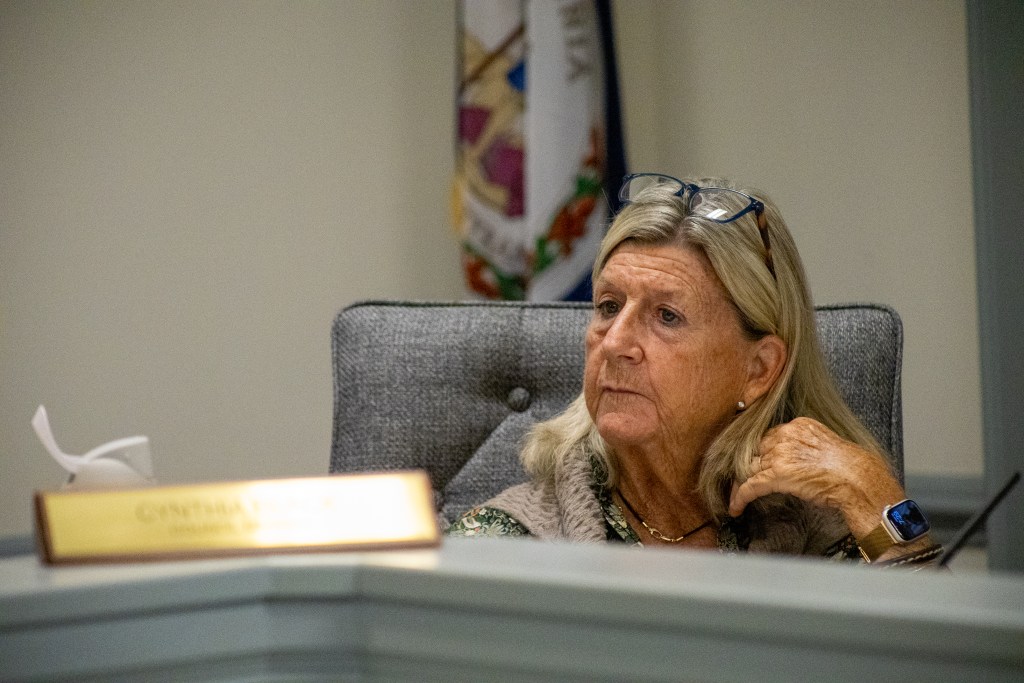
“We, our officers, our chief, everybody’s very clear that until it gets fully worked out, Gordonville’s on a pause,” Brooks said. “He has let Council know that and the Council has agreed that that’s the right route. Even though there is an injunction, like you said, out right now, Council has agreed that that’s the right route.”
By Sept. 25, Brooks said that he was mistaken. After overhearing Brooks making a similar statement in person about the status of the program, Votaw pulled him aside to inform him that Gordonsville police were once again taking part in the agreement, Brooks said.
On Sept. 11, Town Manager Anthony Schienschang said he was unsure whether the pause had ended. On Sept. 24, Schienschang told Charlottesville Tomorrow that his understanding was that the department was “following whatever the law says” but that he had still not received any notice from Votaw. Votaw directly reports to Schienschang in his dual role as Deputy Town Manager under Gordonsville’s recently restructured Department of Public Safety. (Schienschang resigned due to moving out of the area effective Oct. 2, so as of today, Votaw is also Interim Town Manager.)
On Sept. 22, Councilmember Cyd Black said she had heard rumors that Gordonsville police had started working with ICE again but hadn’t been able to get confirmation. On Sept. 23, Vice Mayor Emily Winkey said she hadn’t heard anything about the status of the pause.
“It’s a breakdown of communication to me,” Winkey said, adding that she wasn’t sure why Council hadn’t gotten any correspondence from the town manager.

Councilmember Nick Paxton said on Sept. 23 that, as far as he knew, the pause was still ongoing. He said that after seeing the community’s response to how they initially found out about Gordonsville’s contract with ICE, he would expect to be notified about any further developments.
“At this point, we would need updates and a lot more town-wide transparency about it,” Paxton said.
He was surprised to learn that Votaw had resumed cooperation with federal immigration agencies weeks earlier.
“I think we all want more information,” Paxton said. “Obviously, none of us want to be blindsided by a question. I spoke with [Vice Mayor] Emily Winkey a day or two ago and she was frustrated about how she’s been blindsided by stuff, and I agreed with her frustration. I think everyone would. Obviously, the public — or some members of the public — are frustrated, rightfully so.”
Paxton added that he would like to see discussion at meetings about the status of the 287(g) program and that if the pause is no longer in effect, a statement should be released.
As localities improvise on ICE agreements, the public gets left behind
All of this begs the question: If Gordonsville’s leadership isn’t in the loop on whether their police officers are engaging in immigration enforcement, how is the community expected to access that information?
Alex Kornya, litigation director for Legal Aid Justice Center, said that the Gordonsville Department of Public Safety’s decision to pause — and then resume — active participation in its 287(g) agreement is just one of a wide range of ways that law enforcement agencies across Virginia have been improvising in response to the state legislation limiting local cooperation with ICE and the resulting litigation.
Until the agreement is ended, one must assume that anytime you see someone from the Gordonsville Public Safety Department, they may be actively enforcing civil immigration law, even if ICE isn’t there. Until the agreement is ended, that’s just the reality.
—Alex Kornya, Legal Aid Justice Center litigation director
Kornya said that many Virginia counties including Craig, Smith, Pittsylvania and Buchanan have terminated their agreements entirely, while a few others like Grayson “still technically have their contract, but they’re not doing much or anything at all.” Still others have let their programs lapse by attrition, as some agencies, especially those in rural areas that struggle to retain staff, have simply not replaced the one or two officers who were authorized to work with ICE after they left the job.
Approaches to how to share that information with the public have been just as varied.
On a practical level, a lack of transparency about whether or not a law enforcement agency is actively participating in immigration enforcement activities as part of a 287(g) agreement, and to what degree, can be corrosive to public trust, Kornya said.
“It is a public safety problem for people who are victims of crime or who otherwise need to be able to interact with law enforcement to be chilled from doing so, because of the fact that these agreements place local law enforcement in this dual role where they are not necessarily solely focused on assisting victims, Kornya said. “There remains this danger that they will be talking to you in their immigration enforcement capacity.”
Kornya’s message to Gordonsville community members was unequivocal: “You can’t assume that anybody’s on a pause. I mean, that has no legal meaning whatsoever.”
“Until the agreement is ended, one must assume that anytime you see someone from the Gordonsville Public Safety Department, they may be actively enforcing civil immigration law, even if ICE isn’t there. Until the agreement is ended, that’s just the reality.”
‘It should not have taken a reporter for us to learn that the town police had made this agreement’
The decision to end the pause isn’t the first time that the public has been left out of the conversation when it comes to Gordonsville’s 287(g) agreement. Most of the ongoing complaints from community members have focused on how the program was originally authorized.
Gordonsville’s 287(g) agreement was finalized on May 17. But public knowledge of Gordonsville’s cooperation with ICE only became widespread in August, after an article was published in the email newsletter Byrd Street breaking the story (subscription required). WMRA reported that Gordonsville police assisted in an immigration raid in Page County in June, but did not mention the 287(g) program specifically.
There was no public deliberation of the contract. Vetting consisted of a private meeting between Votaw, Schienschang and representatives from ICE. Asked who those representatives were, Schienschang told Charlottesville Tomorrow he did not remember, and Votaw said he was prohibited from sharing their identities by the 287(g) agreement.
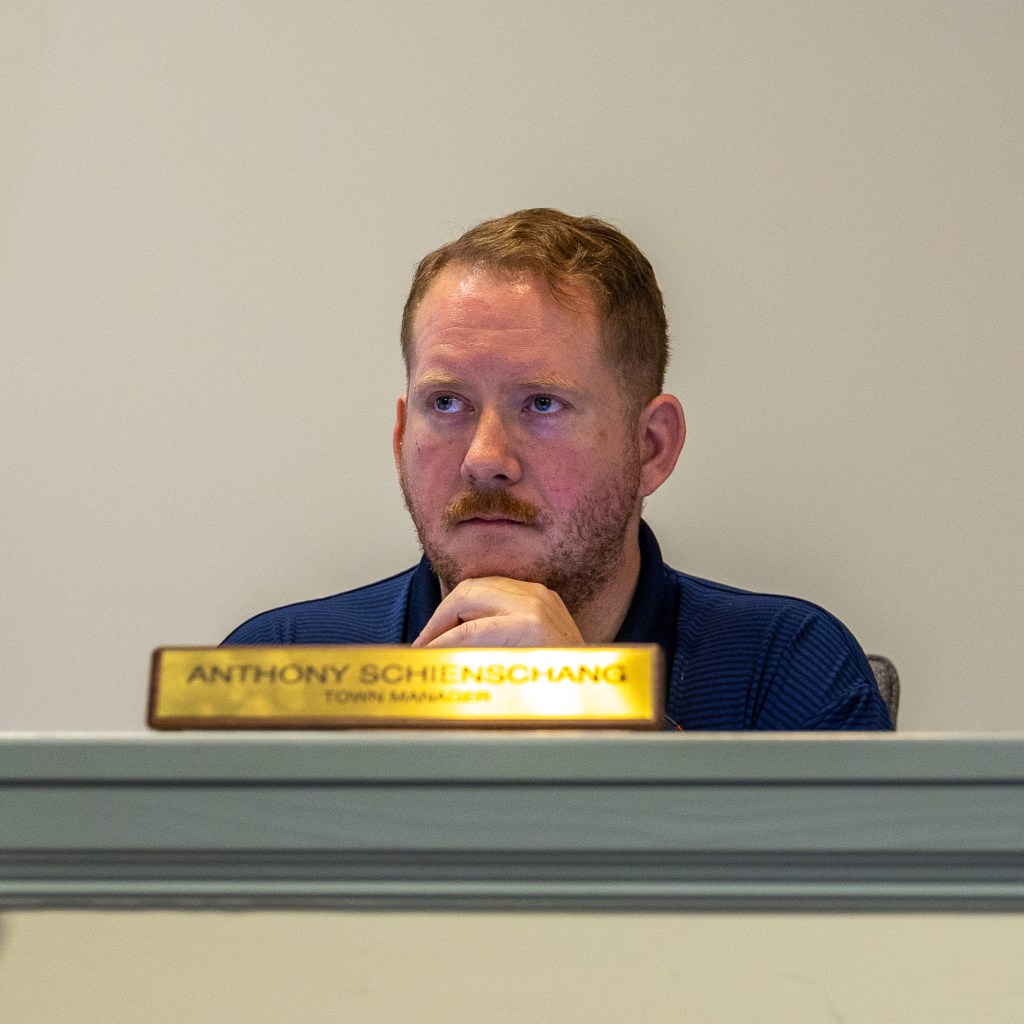
On May 18, a day after the contract was finalized, Votaw and Schienschang met with Town Council in a closed session to discuss it. Schienschang told Charlotteville Tomorrow that the meeting took place under the personnel exemption of the Virginia Freedom of Information Act (VFOIA) for closed meetings, Section § 2.2-3711 (A)(1) of the Code of Virginia, which allows for discussion of specific employees, including hirings, performance and salaries.
But Mayor Brooks described the session as a broader discussion of the agreement, and Town Council members said they didn’t recall any individual employees being discussed.
Megan Rhyne, executive director of the Virginia Coalition for Open Government, said the (A)(1) exemption isn’t meant to be applied broadly.
“The exemption exists to protect the personnel information of individual people,” Rhyne said. “It’s not an excuse to talk about general human resources, personnel, you know, job description — that type of general discussion. That’s not what it’s for at all. That kind of thing should be discussed in open session.”
“The policy statement says that exemptions should be applied narrowly. When exemptions are applied broadly, the public is left in the dark, forced to react instead of being part of the decision making,” she said.
By the time the news about Gordonsville’s 287(g) agreement finally broke in August, Gordonsville officers had been taking part in immigration enforcement, both during everyday procedures in Gordonsville like traffic stops, and in off-duty ICE operations elsewhere, for three months. Around the same time, Votaw told Byrd Street — and soon after The Daily Progress (subscription required) — that the department’s participation in the program was “paused” due to the federal litigation.
Still, residents of Gordonsville and nearby towns showed up to the meeting on Sept. 8. Those who gave public comments opposed the agreement for a range of reasons, from potential civil rights abuses to concerns about local policing priorities. But many of the arguments community members presented at the meeting centered on transparency.
The Rev. Lachlan Hassman, a Gordonsville resident who serves as Priest-in-Charge of Christ Episcopal Church on High Street, spoke directly to the mayor.
“Mayor Brooks, you keep up a significant and admirable social media presence. You interact with your constituents regularly online. You pay attention to us when we come meet at meetings,” Hassman said. “It is clear that you want people to know what’s happening in town, and you have repeated your commitment to government transparency, which is why it is so disappointing to have learned about this in the way that we did. It should not have taken a reporter for us to learn that the town police had made this agreement.”
Hassman urged Brooks not to “hide behind procedure,” referencing previous comments Brooks had made that the contract was an administrative decision that Town Council technically didn’t have to weigh in on.
Katie Stevens, another Gordonsville resident, said she agreed with the concerns she had heard from other speakers that evening and expressed “discontent with the cooperation with ICE and the lack of transparency initially.”
Jack Maus, a Keswick resident who owns rental property in Gordonsville, told Council that “this type of local cooperation with an aggressive federal deportation program reflects a policy decision that is so controversial and so divisive that it should not be made without prior notification to, and support of, a majority of the town citizens, and an affirmative public vote by members of Town Council.”
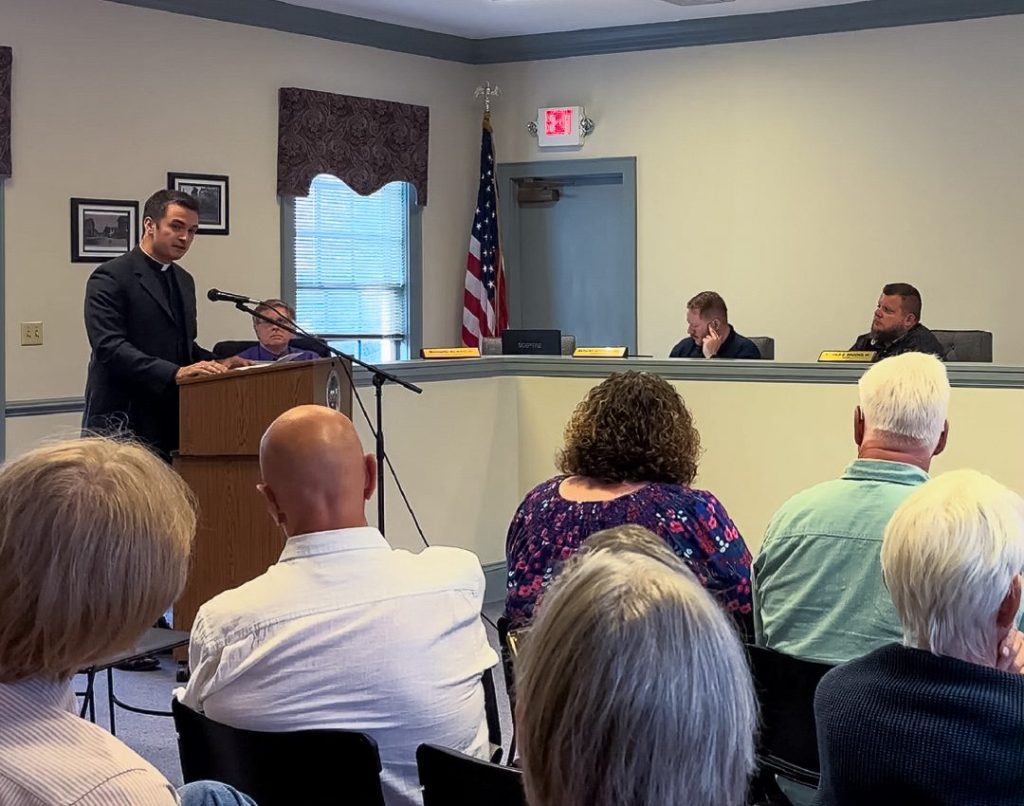
Mayor Brooks ended the public comment period by saying that Council was “unable, of course, to respond back with the amount of business that we have to do,” and invited audience members to a quarterly community meeting on Oct. 5 “to engage in two-way conversation.”
That wasn’t a sufficient answer for Maus’ wife, Lyn Bufton, who replied, “How are we supposed to respond? Are we going to sit around until October and talk about this some more?” She requested a Council-backed directive that no collaboration with ICE would take place at least until the Oct. 5 meeting.
“Are our friends and neighbors going to be at risk of being interrogated, of being detained?” Bufton asked Council. “If we protest out on the street with signs and do our lawful right to be peacefully protesting, are we going to be at risk of physical harm and being detained, because ICE is now in an agreement with the police department that we depend on when we’re in trouble?”
And residents aren’t alone in believing that their questions and concerns about the program haven’t been adequately addressed.
“I learned a lot and I heard them clearly,” Winkey said of the commenters at the Sept. 8 meeting. “This is not something that they want. Nobody in the room wanted this. And they were hoping that we as council would address it, but we did not.”
Winkey is one of two members of Town Council who told Charlottesville Tomorrow she opposes Gordonsville’s 287(g) program and supports its termination. The other is Cyd Black.
“I do not feel that Gordonsville needs ICE in this small town,” Winkey said. “We do not. We see what’s happening in Minnesota and I don’t believe in mistreating anyone.”
(In Minnesota, the federal government deployed thousands of federal agents to the Minneapolis-St. Paul area in Dec. 2025 during “Operation Metro Surge.” Agents shot several people, killing two, U.S. citizens Renee Good and Alex Pretti. Sahan Journal has been reporting on the impact of Operation Metro surge on immigrant communities. In 2025 and 2026, dozens of other deaths have been attributed to ICE according to news reports from journalists around the country.)
Winkey said that having the only discussion of the agreement take place in closed session created confusion over what, if anything, Gordonsville Town Council members were allowed to share about the issue that so many community members are concerned about. When Winkey was originally approached by journalists about Gordonsville’s cooperation with ICE, she declined to comment — not because she didn’t have thoughts to share, but because she believed she couldn’t.
“It’s just the way the Information Act is,” Winkey said. “When we say things in council and you say, ‘It’s on the closed session,’ then we don’t discuss it.”
Because closed sessions don’t come with recordings or detailed minutes like open meetings, there’s also no agreed upon accounting of what took place during that critical discussion.
Asked for their recollections of the meeting, town officials offered accounts that disagreed with one another on nearly every crucial detail — when the meeting took place, how long it took, who was there, whether Votaw approached Council prior to or after signing the contract and whether that was made clear, and how the nature of contract itself was characterized.
Gordonsville’s ICE agreement is based on relationships, not records
Votaw and town officials have repeated one message consistently: The department’s collaboration with federal immigration authorities would prevent ICE raids in Gordonsville. The only document related to Gordonsville’s 287(g) agreement that has been made publicly available, the Memorandum of Agreement, has no such stipulation.
“If I work with them, then obviously, they’re working with me — open lines of communication,” Votaw told Byrd Street on Aug. 28. “And the other thing I told council is I’m not allowing raids in the town and stuff like that. This is not operating like you see on the news where they keep using raids. This gives me the opportunity to control that.”
Brooks has made similar statements to the press, and Schienschang told Charlottesville Tomorrow it was a major factor in his consideration of whether Gordonsville should enter the 287(g) program. But when Charlottesville Tomorrow pressed Votaw, Schienshang and Brooks on which part of the agreement specifically gave Gordonsville police the ability to prevent raids, all three conceded that there was no such guarantee, at least not in the contract.
“I don’t know how independent federal authority would be restricted by any agreement,” Schienschang said.
All three said that the understanding that ICE would not perform raids in Gordonsville was relational — based on an understanding between Chief Votaw and ICE representatives he was in communication with. Schienschang said that the ICE representatives at the private meeting prior to signing the contract “seemed very respectful of our wishes,” but he said he couldn’t remember who those representatives were.
Charlottesville Tomorrow asked Votaw what mechanism existed for enforcing the “no raids” assurance since it wasn’t written into the contract.
“The reason that it’s not in the contract is because that’s a federal contract that’s held or they do that for across the nation,” Votaw said. “But I’m working locally with the local guys, okay? The mechanism is that if they decide to just do whatever they want in the town, guess what? I’ve told them I’ll pull out.”
But when asked who “the local guys” were that Votaw was working with, Votaw declined to answer, saying that doing so would be a “direct violation of the agreement.”
“So, I have a side that I’m trying to be as transparent as possible,” Votaw said. “And then I have an agreement with the federal government. And I don’t want to irritate both of them, even though I do regularly.”

Votaw’s answer isn’t unusual for the head of a law enforcement agency with a 287(g) agreement. But it does mean that for residents, the only real leverage to prevent raids in town is the police chief’s willingness to walk away, backed by the assurance of one or more unknown ICE representatives whose identities town officials cannot or will not disclose.
And it fits into a larger national picture of concerns about transparency related to the 287(g) program.
Across the country, headlines have popped up about partnerships between ICE and local law enforcement testing the bounds of open government.
In Wyoming, the American Civil Liberties Union has said that multiple counties that had signed 287(g) agreements with ICE had failed to notify the public or seek their input, according to a July report from WyoFile. In May, the American Civil Liberties Union filed a lawsuit against the Laramie County Sheriff’s Office alleging that the sheriff had broken state law by signing three 287(g) contracts without seeking approval from county commissioners or engaging in a public process.
Also in May, an investigation by The Florida Trib uncovered a secret ICE directive prohibiting local law enforcement agencies in Florida from answering questions about their own cooperation in immigration activities. Even documents created by the law enforcement agency are understood to be “under the control of ICE” and can’t be shared without their approval, the report says.
Legal Aid Justice Center’s ongoing investigation of 287(g) agreements in Virginia — which has included more than 50 Virginia Freedom of Information Act requests to local and state law enforcement agencies and correctional facilities — has uncovered similar results. They too find agencies responding to questions by saying ICE does not let them share information.
“That is part of the problem with 287(g) agreements — is that they give sheriffs this sense that they can make arguments that somehow they have contracted out of the responsibility to follow state law,” Kornya, the litigation director, told Charlottesville Tomorrow.
That makes it harder for everyone involved — the press, advocacy organizations, and community members who just want to know what their local law enforcement agency is doing in their name, with their tax dollars — to get the information they need.
I got the public that I’m trying to be transparent with, and then I got the federal government who’s like, ‘You can’t say this, or this is our information, leave it to us.’ So I’m trying not to piss off either side.
—Gordonsville Police Chief Chris Votaw
Votaw told Charlottesville Tomorrow that he was unable to comment on several basic details regarding his department’s participation in immigration enforcement activities, including how many officers were part of the 287(g) program and how many arrests and detentions had taken place since the contract was signed.
Votaw confirmed that Gordonsville police had taken part in targeted immigration enforcement activities in other localities, like the June raid in Page County, but said he could not share further details due to the terms of the contract. Asked whether his department had assisted with any immigration enforcement activities in nearby Greene County, including the large-scale operation on June 23 that triggered an investigation by the attorney general, Votaw once again declined to comment.
“They’re in control of all that, Votaw said. “And I don’t wanna — again, I got the public that I’m trying to be transparent with, and then I got the federal government who’s like, ‘You can’t say this, or this is our information, leave it to us.’ So I’m trying not to piss off either side.”
On the evening of Sept. 17, Charlottesville Tomorrow submitted FOIA requests to both the Gordonsville Department of Public Safety and the Greene County Sheriff’s Office for records and communications related to potential cooperation on immigration enforcement between the two counties.
On Sept. 21, Gordonsville’s clerk sent an email indicating that the cost to fulfill the request would exceed $25. On Sept. 30, five days after the deadline to complete the request under Virginia law, Town Manager Schienschang sent an estimate on behalf of the clerk in the amount of $790.81. Charlottesville Tomorrow has asked them to proceed with the request.
Greene County Sheriff’s Office responded to the request on Oct. 2, saying that with the exception of one email on grant funding, no records of cooperation between the two counties in immigration enforcement activities exist.
So, what’s known about Gordonsville’s participation in the 287(g) program remains largely a function of what Chief Votaw chooses to say and when. What isn’t known — how many officers are deputized, how many arrests or detentions have taken place, which outside operations Gordonsville officers have joined and at what cost to the town — is hidden in outstanding FOIA requests and conversations the public has no record of.
Soon, though, the public will have another chance to voice their positions to the Town Council, the quarterly community meeting scheduled for Monday, Oct. 5, at Gordonsville Town Hall on Main Street. It will be the first time since the Department of Public Safety signed the agreement with ICE that residents, council and the chief who signed it will be in the same room, in open session, to discuss what Gordonsville’s participation in 287(g) actually looks like — and the first real test of whether the answers residents were told to wait for in September will actually arrive.
Virginia localities with 287(g) agreements with the Department of Homeland Security
| Law enforcement agency | Type of 287(g) agreement | Date signed | Link to the Memorandum of Agreement |
| Alleghany County Sheriff’s Office | Warrant Service Officer | 6/3/25 | link |
| Amherst County Sheriff’s Office | Task Force Model | 7/29/25 | link |
| Appomattox County Sheriff’s Office | Task Force Model | 5/13/25 | link |
| Bedford County Sheriff’s Office | Task Force Model | 3/7/25 | link |
| Buckingham County Sheriff’s Office | Task Force Model | 5/16/25 | link |
| Campbell County Sheriff’s Office | Task Force Model | 5/8/25 | link |
| Franklin County Sheriff’s Office | Task Force Model | 4/23/25 | link |
| Frederick County Sheriff’s Office | Task Force Model | 12/8/25 | link |
| Gordonsville Department of Public Safety | Task Force Model | 5/17/26 | link |
| Grayson County Sheriff’s Office | Task Force Model | 5/8/25 | link |
| Greene County Sheriff’s Office | Task Force Model | 5/8/25 | link |
| Hopewell County Sheriff’s Office | Task Force Model | 6/30/25 | link |
| Loudoun County Sheriff’s Office | Warrant Service Officer | 3/26/25 | link |
| Mecklenburg County Sheriff’s Office | Task Force Model | 5/13/25 | link |
| Page County Sheriff’s Office | Task Force Model | 3/19/26 | link |
| Richmond County Sheriff’s Office | Task Force Model | 6/12/25 | link |
| Scott County Sheriff’s Office | Task Force Model | 6/11/25 | link |
| Shenandoah County Sheriff’s Office | Task Force Model | 4/14/25 | link |
| Shenandoah Police Department | Task Force Model | 6/9/26 | link pending |
| Tazewell County Sheriff’s Office | Task Force Model | 9/9/25 | link |
| Washington County Sheriff’s Office | Task Force Model | 6/11/25 | link |
| Wise County Sheriff’s Office | Task Force Model | 7/23/25 | link |
Retrieved Oct. 1, 2026 from ICE.gov