

Throughout the month of March, Charlottesville Area Transit (CAT) is surveying transit riders to better understand the transit system and guide improvements during the agency’s annual and long-term planning.

According to a news release from the City of Charlottesville, surveyors will ride select transit routes during peak hours and ask riders about their experiences. Their brief questions will focus on where the riders boarded, where they plan to get off and whether they are transferring to another route. No personal identifiers will be required.
“As CAT continues to grow and evolve, understanding how riders move through the system is essential to improving route efficiency, protecting key transfer locations, and strengthening connections across the network,” the news release said.
The survey is being conducted in a partnership between the city of Charlottesville and the University of Virginia to collect data on where transit riders switch lines and how to protect these key connections. It will help to fill the data gap that emerged in 2020, when CAT started to offer its services for free with the help of funding from the Virginia Department of Rail and Public Transportation. Because of the change, farebox data is no longer available to track how riders switch between lines.
Take action
Participate in a survey about how you use Charlottesville Area Transit
Charlottesville Area Transit (CAT) users have a chance to help CAT plan for its future. During the month of March, surveyors from the University of Virginia, in collaboration with the City of Charlottesville, will approach CAT riders during peak hours to ask them about where they boarded, where they will get off, and whether they had to switch between routes.
To help, all you need to do is participate if approached during your commute.
The collected information will help CAT gain a better picture of how riders are using the transit system, and how to improve the experience and meet the community’s needs. Participation is optional, and no personal identifiers are required. For more information, see Charlottesville’s web page about the survey.
While we can’t cover every story that’s important to you, we do our best to be responsive to your needs. We use tips from readers to choose which stories to cover, to incorporate information into broader reports or to help us decide how to grow Charlottesville Tomorrow. Here’s where you can tell us what you think we should be covering.
More on Charlottesville Area Transit service
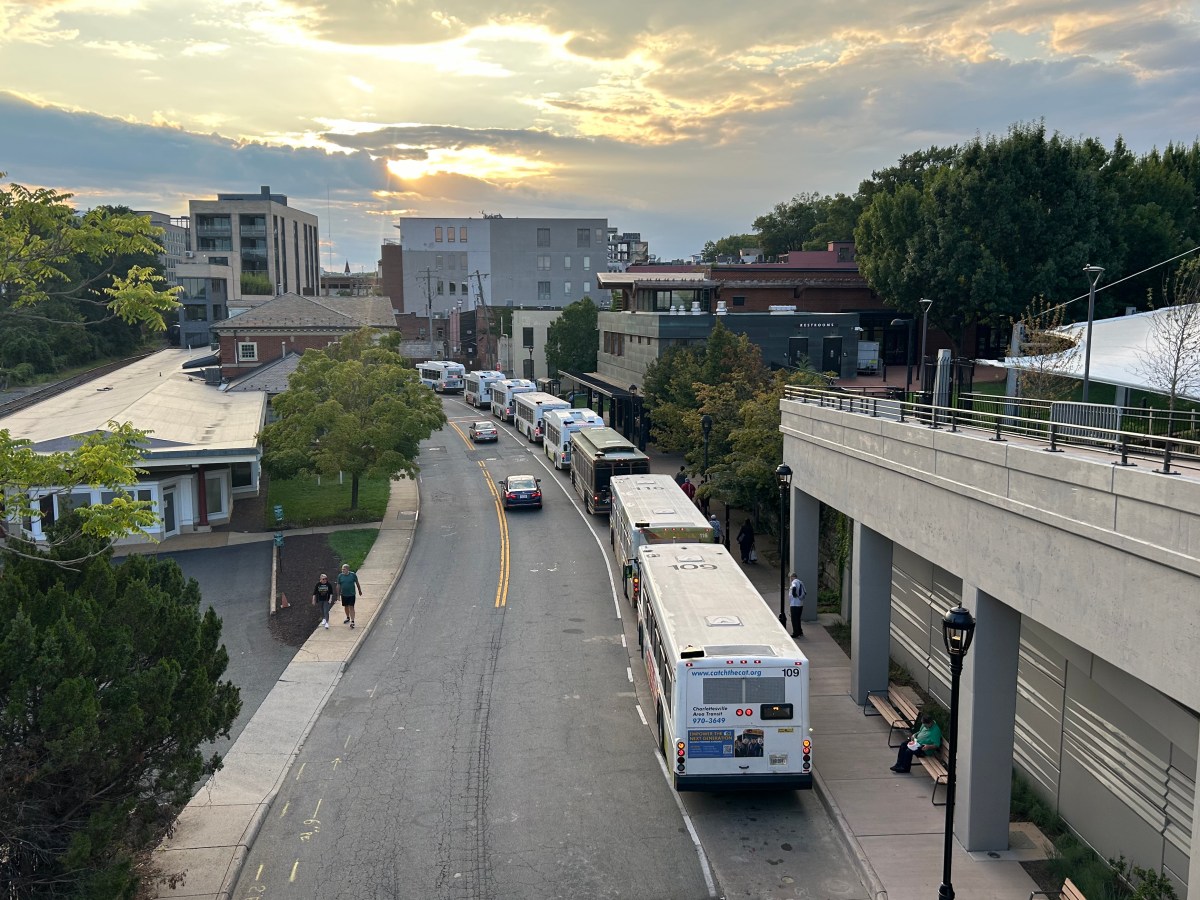
CAT ridership improving, but still lower than pre-pandemic levels
“I want to urge you to continue to make transportation, and bus transit in particular, a real priority for the lives of real people,” said Rev. Alex Joyner, pastor of Charlottesville First United Methodist Church, during a July 21 City Council meeting.


Charlottesville adds more full-time bus drivers than ever before, but residents say it’s not enough
Residents want more drivers to further reduce wait times and to improve reliability, but City Council says that will take time.

Many people are asking for Charlottesville transit to run more and go electric — but first, the city needs more bus drivers
Kyle Ervin at CAT sent this message by text: “All in all, we simply need MORE DRIVERS! We’ll take all the applicants we can get!”
More local News
Following sudden closure of Albemarle County Public Schools, here are some resources to help families
Local and national organizations can provide assistance with childcare, meals and mental health.


¿Te has preguntado alguna vez cómo una idea se convierte en un artículo de noticias? Las respuestas, en esta guía
Cubrimos temas importantes para la comunidad, pero sólo podemos hacerlo con tu ayuda.

Albemarle County abruptly closes schools after finding failures in employee background checks
“Families should not have to accept any uncertainty about the adults working with their children, and I will not risk the safety of our students,” Acting Superintendent Chandra Hayes said in a statement.

Health officials identify measles exposure sites in Charlottesville and Farmville
The news comes as the U.S. lost its measles elimination status for the first time in 26 years.


UVA students say they were promised a university committed to inclusion. Now, they’re watching the university dismantle those programs.
The university voluntarily entered an agreement with the Department of Justice and pulled funding from diversity and inclusion programs that students say they depended on.