

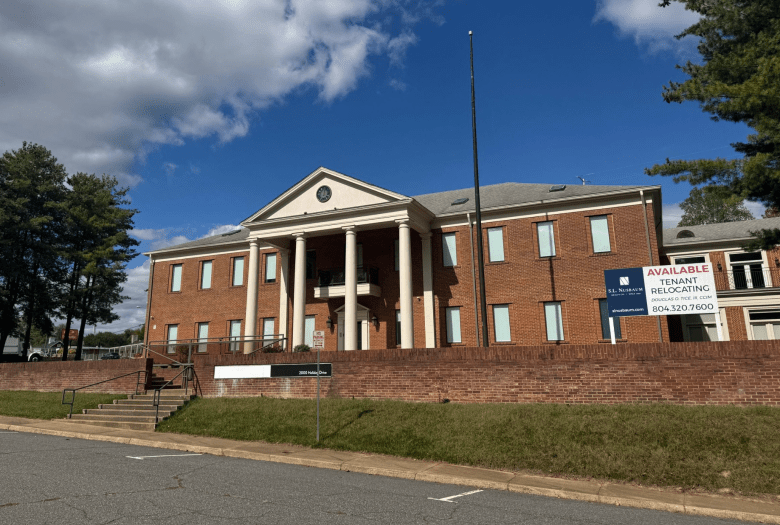
Despite a tight timeline, doubts from community members and a request from Charlottesville’s Congressional representative to delay, the city says it is on track to open an emergency low-barrier homeless shelter at 2000 Holiday Drive on Tuesday, Sept. 1.
On July 17, the city announced that it would clear an encampment along the Charlottesville bank of the Rivanna River at Pantops on Sept. 1. The plan, the city said at the time, was to have an emergency low-barrier shelter ready for the dozens of people displaced from the encampment.
For the past few weeks, as the city has hustled to get a shelter operator in place, officials have offered up few details about who will run the shelter and how. That has frustrated community members living at the encampment, who are worried about going to a shelter they know very little about, run by people they are not familiar with and who are not familiar with them.

Six days before the shelter is scheduled to open, city officials signed a contract with a shelter operator. The contract includes some details about how the facility should be run, details community members have been eager to hear.
City Manager Sam Sanders announced the Sept. 1 shelter opening date in a video posted to city social media accounts on Aug. 24. In the video, he also responded to a letter Congressman John McGuire, who represents Virginia’s 5th District in the House of Representatives, posted to social media, urging the city to delay the opening of the shelter due to concerns from nearby local businesses. Sanders told CVILLE Weekly that he never received the letter in the mail or directly.
“Compassion does not mean turning a blind eye to public safety or the concerns of local businesses,” McGuire wrote in a Facebook post where he posted the letter. “The city has a responsibility to protect taxpayers, families and property owners, not force businesses to pay for private security because of a failure to plan properly.”
The city will not delay the shelter opening, Sanders said in the video posted to the city’s Facebook page. “It is important for us to continue the priority that we have, to serve our unhoused individuals.”
The city finalized agreements with a shelter operator, Central Arizona Shelter Services (CASS) on Wednesday, Aug. 26. It was an emergency no-bid contract, Charlottesville Community Engagement reported.
Central Arizona Shelter Services (CASS), a nonprofit agency that has operated multiple shelters in the Phoenix area since 1984, will run the shelter for one year, beginning Sept. 1, according to the services agreement and temporary license agreement. The city will pay CASS up to $3.2 million for that year of services, according to the contracts city spokesperson Afton Schneider shared with Charlottesville Tomorrow.
The contract offers up some information on how the city expects CASS to run the shelter.
It stipulates that the shelter will have a maximum capacity of 120 guests, and that it will be a “temporary low-barrier emergency shelter and related services.” The contract defines low-barrier as “access is not conditioned on sobriety, treatment or religious participation, income, employment, identification or local residency.”
CASS “may enforce lawful, behavior-based rules reasonably necessary for safety and operations,” but the contract does not get into those specifics. Per the services agreement, CASS was to provide an operating plan to the city no later than five days before the planned shelter opening. That was yesterday, Aug. 27. Charlottesville Tomorrow requested a copy of that plan, but had not received it by the time this story published on the afternoon of Aug. 28.
That plan should include more details, including how they will determine who is eligible for the shelter, how intake will work, plans for overdose prevention and response, behavioral health response, medication practice, expectations for guest behavior and more.
CASS will do its own hiring, and staff must be trained in, among other things, low-barrier practice; crisis prevention interventions and de-escalation; overdose and naloxone response; CPR and first-aid; disability accommodations; and appropriate boundaries with guests.
Staff have been moving furnishings into the building this week, Sanders said in the video, and there are still some things that the shelter could use, if community members want to help out. As of Thursday, Aug. 27, the city was working on a webpage with information on how to donate and offer services, city spokesperson Afton Schneider told Charlottesville Tomorrow. That information was not available as of 4:30 p.m. on Aug. 28.