

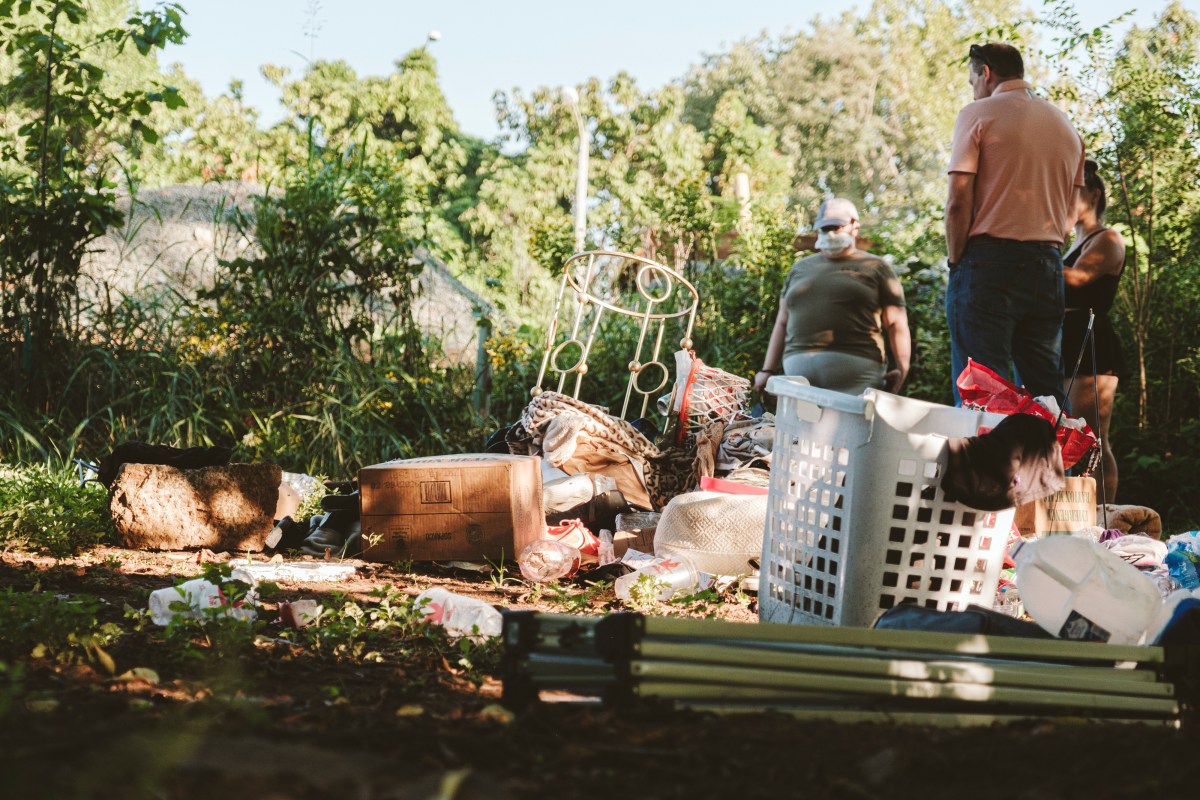
The clearing of the encampment along the Rivanna River at Pantops earlier this week may have looked smooth to outside observers. But it was anything but for some of its residents. One was arrested, one reported stolen belongings, and others cried while packing up what they could carry.
“My whole life is there,” one woman sobbed as she loaded a fraction of her belongings into the van of a mutual aid worker helping her move Tuesday night. “I wanted to stay until it was all gone. This was my home.”
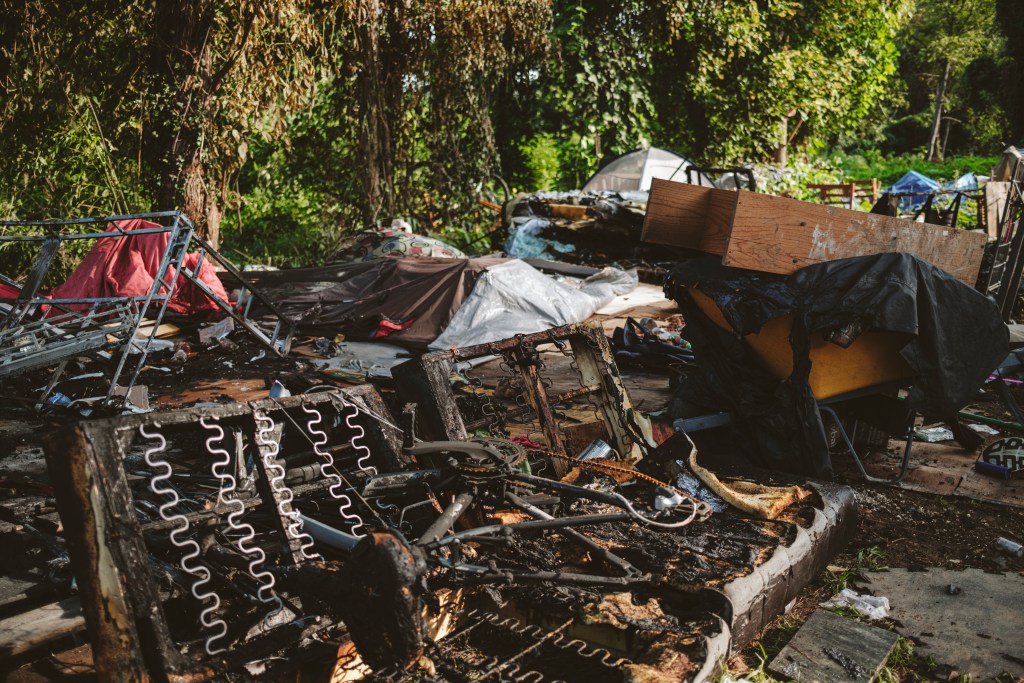
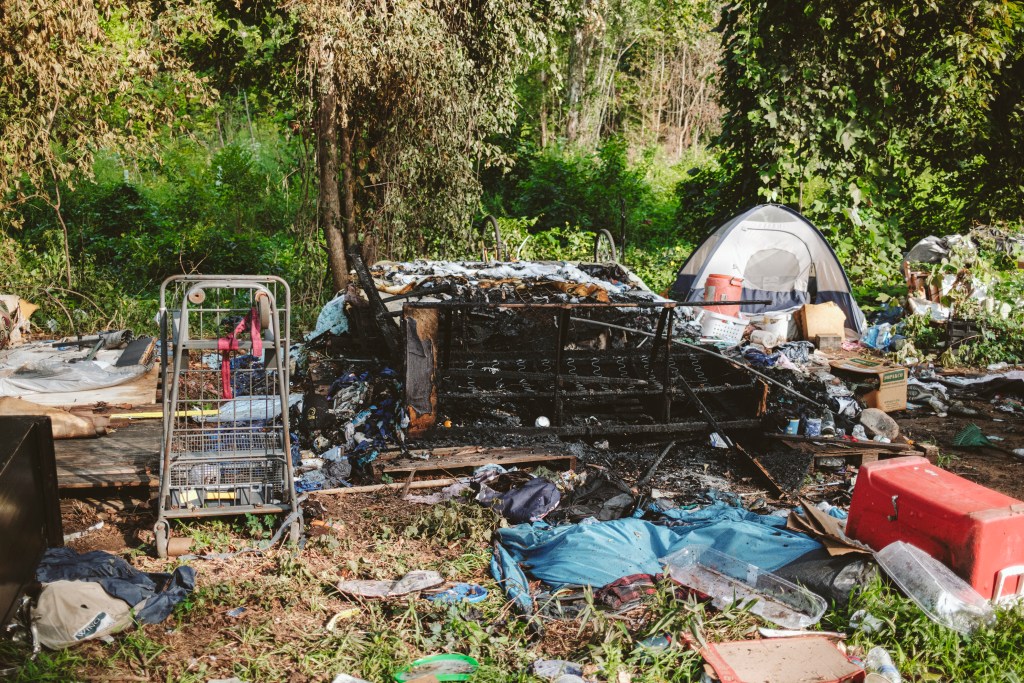
And on Thursday, Sept. 3, the morning after the last few residents had left the encampment, a few tents along different parts of the trail were found burned, with residents’ possessions still inside. The cause is still being investigated, according to Charlottesville Fire Marshal and Deputy Chief of Community Risk Reduction Joe Phillips.
Charlottesville Tomorrow witnessed Charlottesville police arrest one encampment resident, at the encampment, the night of Sept. 2.
The arrest was not related to being at the encampment, Charlottesville Public Safety Information Officer Kyle Ervin told Charlottesville Tomorrow in an email the following afternoon. Instead, he said, it was “an unrelated arrest of an individual who had outstanding warrants in the county (Albemarle County) for unrelated incidents.”
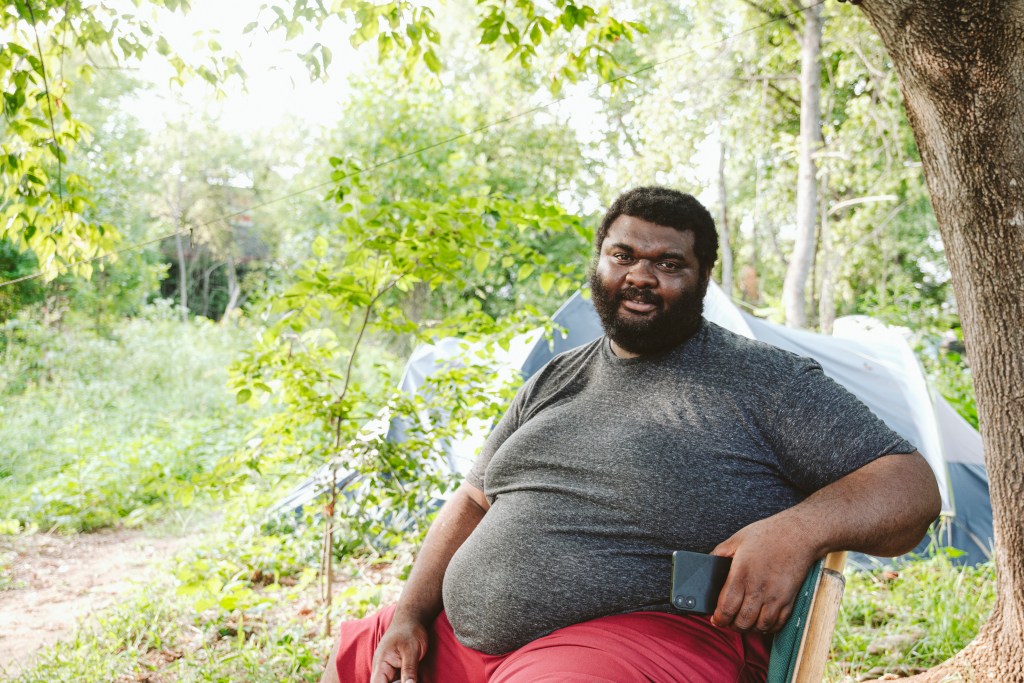
“Tomorrow, the city will declare the encampment cleared, all good,” Donnas “Dee” Chambers said Wednesday. Chambers was one of the last three people to leave the encampment Tuesday night, around 9:40 p.m. “Most people won’t know what happened here.”
At 9:45 p.m. Wednesday, the city issued a short media release thanking “community members, partners, staff, and others who helped support the transition from the Rivanna riverfront encampment over the past two days, and everyone who provided residents with respect, dignity, and space throughout the process.”
“As of today, there is no one remaining in the encampment,” and “cleanup of the former encampment area is already underway as the City works to restore the area for recreational use,” the media release said. It also said that 26 people had completed intake at an emergency low-barrier shelter at 2000 Holiday Drive, which opened Tuesday after a few weeks of planning. It is not clear from the release if all 26 of them came from the encampment, or from other locations.
But that’s not the whole story.
Encampment clearings can lead to more negative outcomes, cost to taxpayers, experts say
Encampment clearings do not end homelessness.
Instead, they often cause a variety of adverse effects on the people forcibly displaced and can lead to higher costs to taxpayers. According to several experts including the American Public Health Association, The National Alliance to End Homelessness and the National Health Care for the Homeless Council, they can cause trauma and worsen mental health conditions; destroy life-saving medication and medical equipment; make it more difficult for healthcare and service providers to locate their patients; contribute to arrests and assaults of residents; and contribute to drug overdoses.
Leaders from three local homeless services nonprofits — The Haven, People and Congregations Engaged in Ministry (PACEM), and the Blue Ridge Area Coalition for the Homeless, warned of these same issues in September 2025, when Charlottesville Police Chief Michael Kochis proposed banning camping, sleeping and storing personal belongings on city property.
“Encampment bans do not end homelessness,” they wrote in an open letter to city officials. “They simply push people further into the shadows, destabilizing lives and making it harder for outreach workers to connect individuals with housing and services.”
And while the city and other partner organizations, such as behavioral health services provider Region Ten, have tried to connect with encampment residents with the hope of minimizing some of those effects, some residents said they felt as though the city wasn’t communicating with them, something experts say is a crucial first step in clearing or relocating an encampment.
Chambers worries that the city and the nonprofit agency it hired to run the 120-bed emergency shelter, Central Arizona Shelter Services, won’t provide the services that unhoused community members need. That’s because they didn’t spend the time getting to know the people in the encampment before quickly planning and opening a shelter, Chambers said.
“How do you know what people need if you’re not communicating with them?” Chambers said in an interview with Charlottesville Tomorrow last month.
As rising rents and limited affordable housing continue to drive the number of people experiencing homelessness in the Charlottesville area higher, the city has been working to address the ongoing issue. City Manager Sam Sanders created a “homeless intervention strategy” in October 2023, and finding a building for a low-barrier shelter was at the top of the list. That building is 2000 Holiday Drive, which the city purchased in the fall of 2025 for $6.2 million and eventually plans to turn into a permanent low-barrier shelter.
Next on the list, Sanders said during the Aug. 17, 2026, City Council meeting, is adding more transitional housing, a type of housing that provides individuals and families exiting homeless with supportive services like case management and counseling.
‘We witnessed today the destruction of a neighborhood, of a community’
Earlier this year, local homeless service providers estimated that more than 115 people were living at the encampment, which stretched more than half a mile along the Charlottesville bank of the Rivanna River, from the edge of the Woolen Mills neighborhood to Pantops.
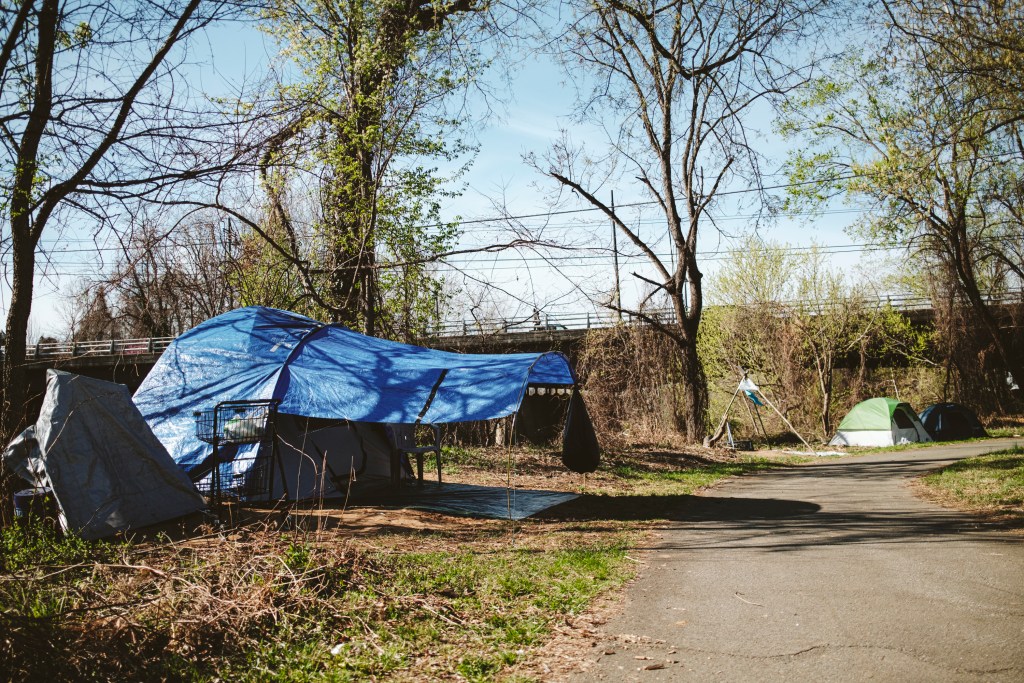
Some city officials were concerned about the camp’s location being prone to flooding, particularly with more severe thunderstorms hitting the area over the summer. Some residents said they felt unsafe using the public trail as long as the encampment was there. One resident even sued the city over it, claiming that the city is selectively enforcing trespassing laws at the encampment.
On July 17, after a sexual assault at the encampment brought critical public attention to the area, Charlottesville Mayor Juandiego Wade announced that the city would clear the encampment on Sept. 1. City officials cited concerns for residents’ safety as the reason. Some people applauded their decision while others decried it.
In the weeks following the announcement, most of the people living at the encampment left. Some decamped to other, less visible locations where they hoped to avoid being harassed by strangers. Some were incarcerated. Some found friends to stay with.
Some stayed. By Sept. 1, between 25 and 30 people were still living at the encampment.
One married couple, Krissy and Joe, who did not provide their last names due to the stigma associated with homelessness, planned to find another site to camp. They’d been at the encampment with their dog for about three weeks. Their two-month old daughter was staying with a relative. Previously, they’d been in a one-bedroom apartment. They said they decided to leave so that instead of paying rent, they could save money for a better place to live.
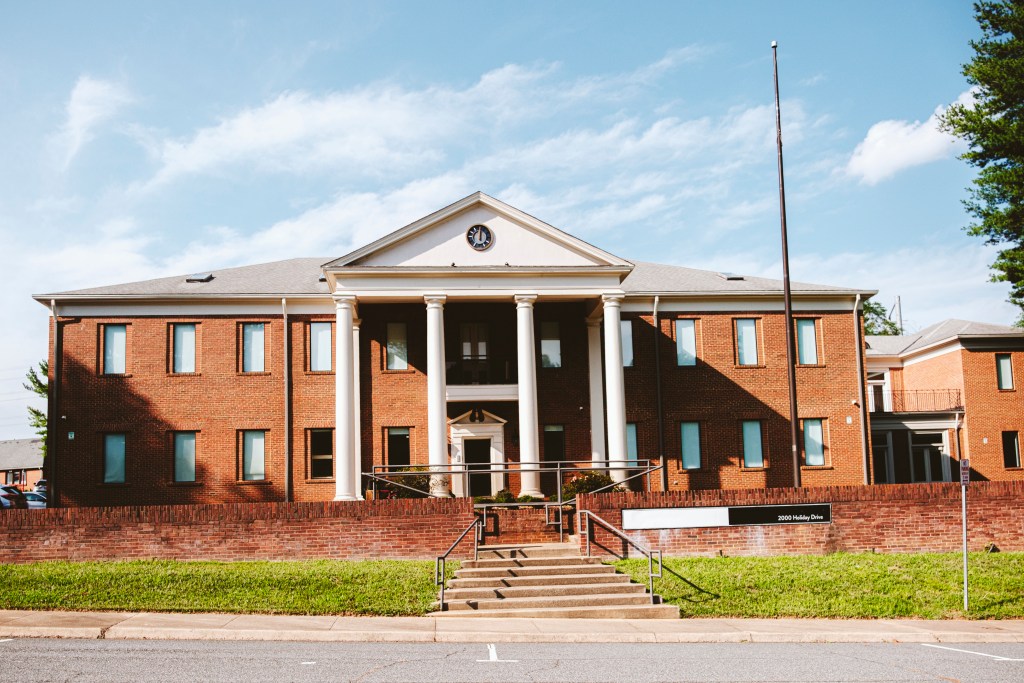
They didn’t want to go to the shelter for a number of reasons. They didn’t want to have to go outside to use the bathroom or take a shower. They didn’t want to be separated, and they didn’t want to be in a big room with a bunch of other people. As of Aug. 31, the day before the shelter opened, it had set out 37 beds in one section for men and 21 in a different room for women, according to a Cville Right Now report. An isolation room with four beds was also set up to accommodate anyone who might become ill.
Their tent had recently been robbed and most of their identification documents stolen, so they were on their guard. But mostly, they said, they didn’t believe this particular shelter would help address the root cause of homelessness and actually get them into housing.
“I’m not looking for a handout,” Joe said. “I want someone to reach down and help pull me up.” A volunteer with the C’ville Care Bears, a mutual aid group that’s been bringing supplies and helping coordinate care for encampment residents, drove them to another place of their choice.
The Care Bears were on site throughout the day on Sept. 1 and 2, offering moving help and emotional support to encampment residents. They carried bags and boxes, drove people where they wanted to go and stood close by whenever city staff and officials talked with a resident.
“These are our friends,” Francesca Clemente, a member of the Care Bears, told Charlottesville Tomorrow. “Today has been stressful, and it has been incredibly sad. We witnessed today the destruction of a neighborhood, of a community. They’re going to scatter. It’s a sad thing to not be able to find your neighbors.”
City officials and staff, including two plain-clothes police officers, drove all-terrain vehicles around the encampment all day Tuesday, offering large lock boxes and bags to folks packing up their belongings. They also offered to bring those things up to the shelter for folks who wanted to go.
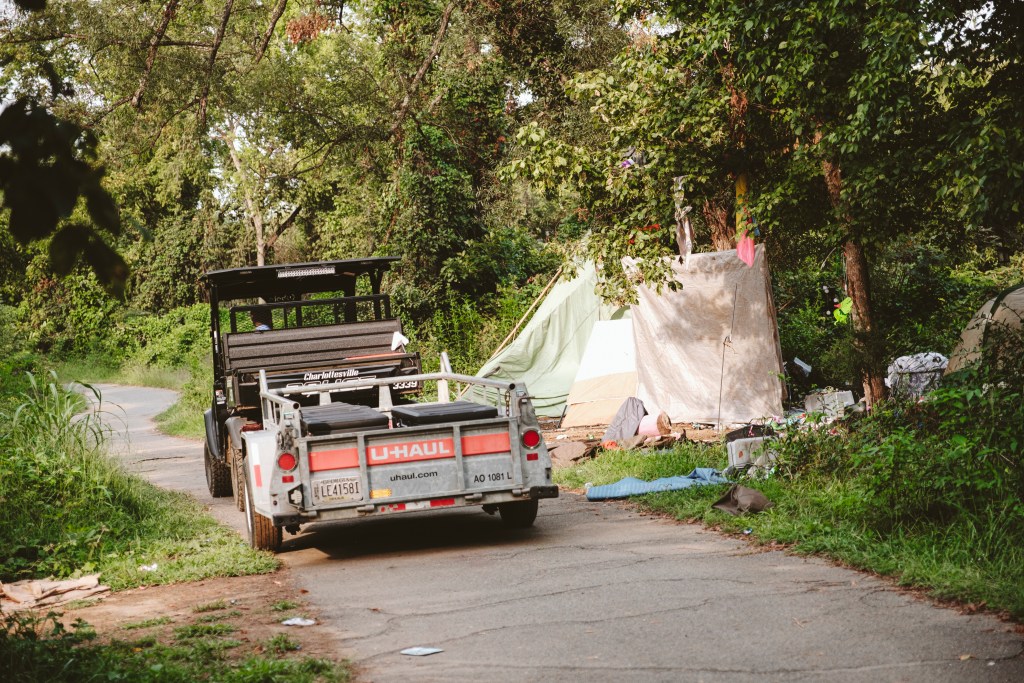
People were wary of both the city’s offer of help and the shelter.
“I’m not handing my stuff to the cops!” one woman said, carrying a large plastic storage container in her arms.
Another woman, who paced around her tent most of the day, packing what she could, asked city representatives to stop pressuring her to move more quickly.
“I need more than 24 hours to get all my things,” she said, wiping sweat from her forehead before patting her dog on the head.
As folks packed and weighed their options, the police surveillance camera spat out its automated warning every few minutes, sometimes even more frequently.
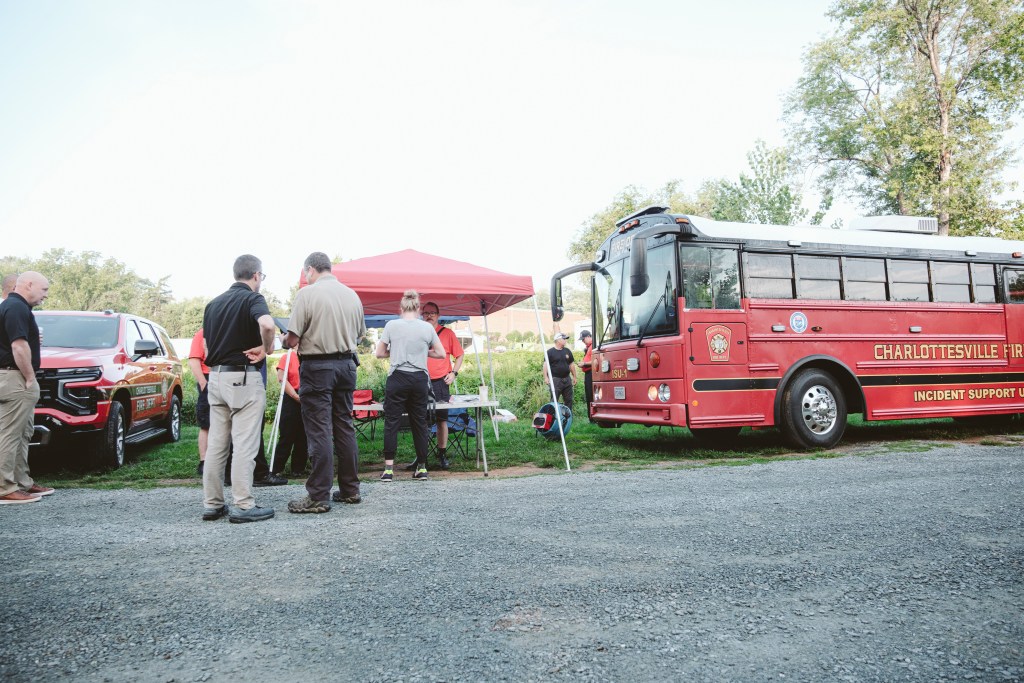
“This site is video monitored and the authorities have been dispatched,” a robotic female voice repeated. “Please leave the premises.”
It stopped once city staff, annoyed by it, asked CPD officers to turn it off.
Jennifer Grant, who had been living at the encampment since December 2025, arrived to pack up her tent to find that many of her belongings had been stolen.
“It’s okay, it’s okay,” she sobbed, attempting to soothe herself as a friend rubbed her back. “It’s only material things. It’s only material things.”
In a different part of the encampment, a man wearing glasses and cargo shorts tried to sort through the contents of a flattened tent. It was his cousin’s tent, he said, and his cousin was incarcerated. He wanted to get his stuff.
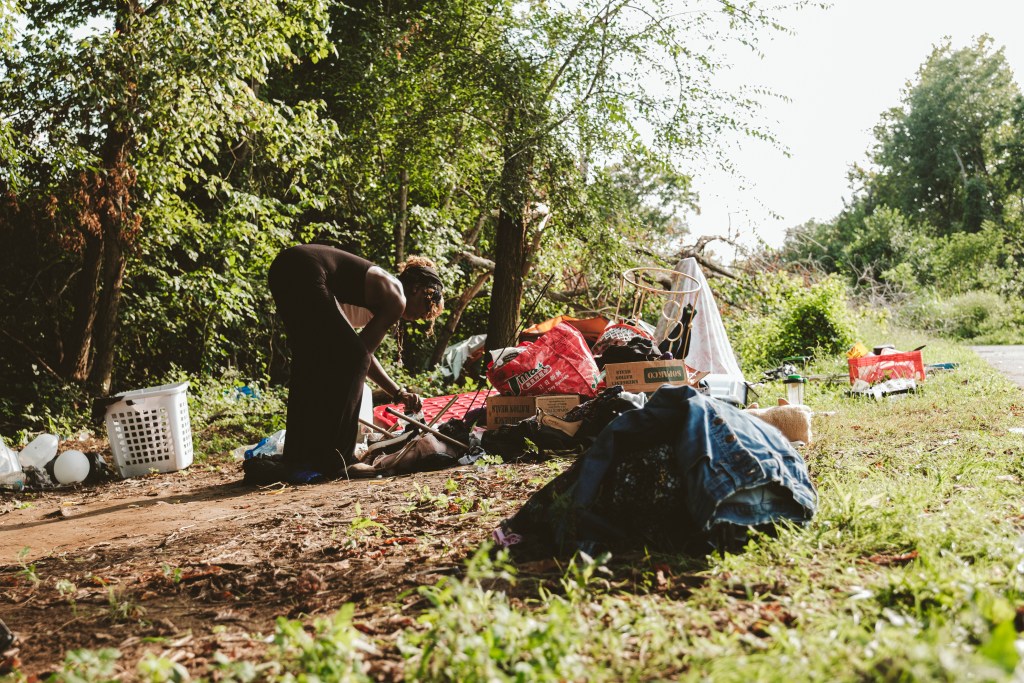
“I know what it feels like to come home to nothing,” he said as he gingerly picked up clothes, a pair of boots, and some electronics to see if they were salvageable. He carefully folded a pair of red pants and placed them in a bag.
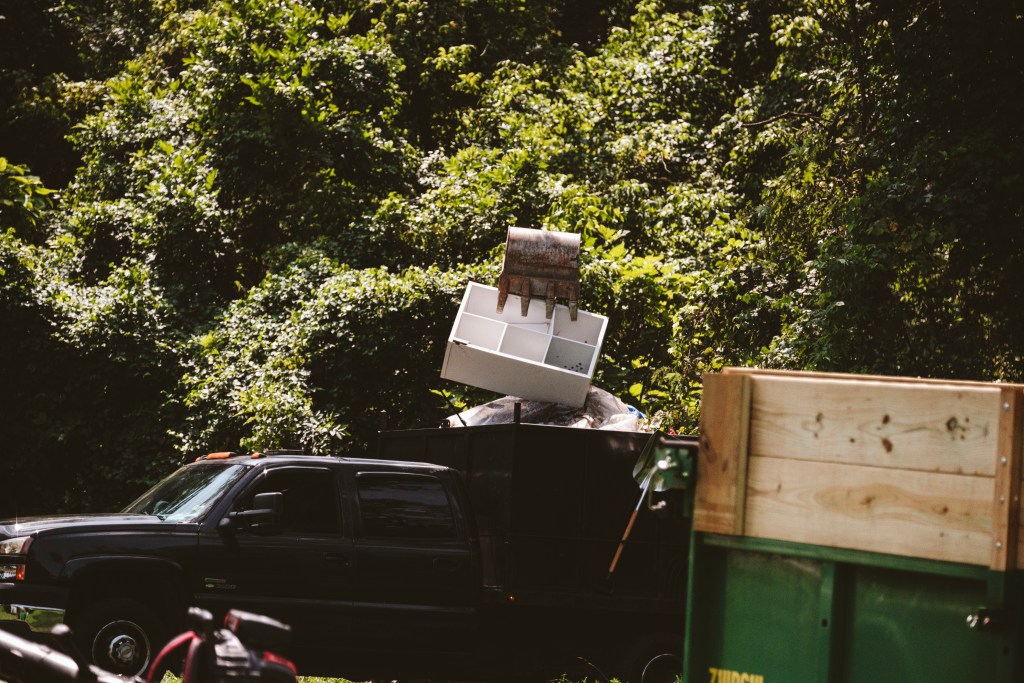
Behind him, near the 0 East High St. edge of the encampment, an excavator had already begun tearing out empty tents.
As he picked up sections of his cousin’s flattened tent to see what else was inside, flies and the smell of rotten food deterred him. He didn’t want to give his name because he didn’t want his cousin to be angry with him for not retrieving more.
“Oh, no. Oh, my man,” he whispered over and over.
Another encampment resident, who had lived in the area for about seven years, long before anyone else was there, told city staff and officials that he wouldn’t go to the shelter. He ended up going after all, to keep an eye on a friend who was released from the hospital and went into the shelter.
Encampment residents say they experienced continued harassment, threats
The past couple of months at the encampment were some of the hardest, Chambers said. Police presence increased after the first sexual assault in July, and more officers — and the cameras installed at the camp — made some residents feel surveilled instead of safe. That incident also brought media attention and intensified interest in the encampment from the general public.
People started filming residents without consent and posting the footage to social media, where the cruel comments piled up. People would stand on Free Bridge, or in the nearby AutoZone parking lot, and yell disparaging things at residents. Someone threatened to burn the encampment down if they weren’t gone by Sept. 1. People flew drones over the encampment.
“We deal with a lot of that stuff,” Chambers said. “Like idiots driving across the bridge at 2, 3 o’clock in the morning, blowing the horn all the way across. There’s no traffic cutting in front of them at that hour. It’s obvious what they’re doing. We’re not stupid.”
“We have people yelling at us, telling us that we’re not good, we’re never going to be anything,” Grant told Charlottesville Tomorrow in an interview last month. “It’s a terrible feeling to wonder if you’re going to wake up the next morning because you’ve got people that are angry that you live down there, whether they’re going to do something to you in your sleep, or to your tent at night.”
The harassment takes a toll.
“They just see you as somebody who’s in the way, or a user, or this or that, and you’re just nothing,” Chambers said. “It definitely bothers you, messes with your mental. You yourself know you’re an individual human being, a person. But then when other people look at you like that, it bothers you and angers you, and it frustrates you. It almost causes you to get in trouble, because now you want to be angry and mad at the person that looks at you like that. It’s hard, and not everybody can do it, but you just have to look away and not let them bother you or stress you out.”
“It’s also hard because it’s not just one person,” he added. “It’s a lot of people.”
Take action
Here’s a guide for Charlottesville and Albemarle County residents
Are you unhoused, a renter or a homeowner who needs help? Find local agencies and programs to connect with in Charlottesville and Albemarle County in Charlottesville Tomorrow’s Housing Resource Guide.
By Wednesday evening, Sept. 2, four people remained at the encampment.
Chambers was one of them. He had previously told Charlottesville Tomorrow that he wanted to make sure everyone else got out safely.
“I feel a lot of responsibility,” he said, taking a sip of Gatorade and shifting around in his chair. Chambers grew up in Buckingham County and moved to Charlottesville about a decade ago. He fell into homelessness after a couple of years, then got a place of his own, then three years later fell back into homelessness.
“I was homeless, then I got a place, and I don’t want to say I forgot about them, but I forgot about them,” Chambers said of the folks he knew still out on the streets. “I should have been checking on them, checking that they was okay. I should have been advocating for them. But I wasn’t,” he said, shaking his head and taking a deep breath. “This time, I want everybody — everybody — who is homeless in Charlottesville to get the right help they need. If nobody is advocating for them, they’re never going to get the resources they need.”
Encampment resident arrested by Albemarle County police late Sept. 2
Charlottesville Tomorrow witnessed one resident being arrested by Charlottesville police on the night of Sept. 2.
According to statements made by CPD officers that night and the city’s Public Safety Information Officer Kyle Ervin, the arrest was related to an outstanding warrant in Albemarle County and had nothing to do with the person’s presence at the encampment. Charlottesville Tomorrow contacted Albemarle County for a copy of the warrant and was directed by the communications office to file a Freedom of Information Act request.
Wednesday evening, Chambers and two other residents (who are a couple) agreed to go to hotel rooms provided by CPD, but they didn’t want to leave a fourth person behind.
CPD Lieutenant Greg Wade mentioned having two hotel rooms, but they needed three. One for Chambers, one for the couple and their dog, and one for the fourth resident. They didn’t want to be separated.
Tense conversation followed. Charlottesville’s Director of Human Services, Misty Graves, urged Chambers and the couple to take the hotel rooms. She had to leave in 10 minutes, she said, and she could drive them. Without having rooms for all four of them, they refused.
After a few minutes, Wade walked up toward the parking lot on the other side of Free Bridge, away from where Dee, the couple, and members of the Care Bears continued packing up the couple’s site.
Chambers hoped Wade was working on getting a third hotel room.
But a few minutes later, CPD vehicles pulled into a nearby parking lot, and Wade and a few other officers — Charlottesville Tomorrow could not see how many — approached the fourth resident, who was talking with a couple of Care Bears. One officer said that there was a warrant out for his arrest in Albemarle County. Then four other officers ran out from under the bridge. They arrested the man and threatened to arrest members of the Care Bears if they touched an officer or didn’t comply with orders.
“I knew it,” Chambers said, shaking his head. “They were too focused on getting us out of here and not [him].”
Less than an hour later, Chambers and the couple were ready to go. Under the watch of five Charlottesville police officers, the three climbed into a van driven by one of the Care Bears. Some of the couple’s belongings were packed into the van, but they had to leave a lot behind.
When the van reached the parking lot, the woman asked Wade if she could come back Thursday to get more of her things without being arrested.
Wade suggested that she get settled in at the hotel and get some rest. Charlottesville Tomorrow did not hear the rest of his response.
Not 11 hours later, at 8:26 a.m. Thursday, Chambers sent two photos to Charlottesville Tomorrow via text message. The photos showed the aftermath of a fire — a charred wooden platform, chairs and mattresses burned down to the metal springs, a scorched bicycle, and other items turned to ash.
A handful of tents were burned, and a video shot by photographer Ézé Amos showed that they were not next to each other, but along different parts of the trail. The tents weren’t abandoned. One belonged to the man arrested at the site Wednesday night. Another belonged to the woman who asked if she could return Thursday to retrieve more of her belongings.
The Charlottesville Fire Department responded to the fire that night, Charlottesville Fire Marshal Phillips said. His office is investigating the cause.
Chambers will be able to stay in the CPD-provided hotel room until Saturday morning. After that, he’s not sure where he’ll go. He toured the 2000 Holiday Drive shelter on Monday and didn’t like what he saw.

“They rushed it,” Chambers said. “This is what happens when you rush it.”
He added that he thinks the situation could have gone better if unhoused community members were more involved in the decisions. And even though he wasn’t planning on checking into the shelter on Thursday, he was going to stop by, to check on his friends.