


One of the first places Vanessa Agyei felt at home at the University of Virginia was among other members of the student group Black College Women.
Black students make up just 6% of UVA’s student body and Black women approximately half that number, according to data shared by the university. Black College Women provided a space at the overwhelmingly white university where Agyei and other Black female students could come together to discuss shared experiences, frustrations, current events, support each other, laugh together or just enjoy each other’s company — without having to worry about being misunderstood or having to explain their experiences to people who didn’t share them.
It’s already hard to be a minority at UVA, Agyei said. But it was even more of a challenge for her, as she’s also the first in her family to go to college.
“If it weren’t for the mentorship and different types of relationships I’ve been able to build there, I don’t know how my college experience would have been,” she told Charlottesville Tomorrow.
But as the academic year kicks off, Black College Women is one of multiple student affinity groups that is no longer funded by UVA. Its defunding is part of the university’s broader dismantling of diversity, equity and inclusion programs, which had been put in place to counteract generations of discrimination and exclusion. The dismantling is not required by federal law, but fits with a trend of colleges across the country stripping back diversity programming to align with directives from President Donald Trump’s administration.
UVA’s elimination of diversity programs has continued to unfold this year, and could have long-term, sweeping consequences, students told Charlottesville Tomorrow. Programs that took years to build are disappearing, leaving students of color, first-generation students and others who have historically been underrepresented at UVA with fewer tools to help them navigate the university and find belonging. Even if future administrations reverse some of these changes, they said, students will have already lost opportunities and relationships that helped them succeed.
‘The institutions that are supposed to support us are failing us’
Black College Women will continue to exist as a student-led group. But without support from UVA, the group can’t afford to host the same events and programming they used to. This includes a book club, which Agyei was supposed to help run this year.
The group can also no longer host events for Black women at its regular meeting spot, the university’s Office of African American Affairs, because an October 2025 agreement between UVA and the Department of Justice prohibits university spaces from being reserved for groups based on race or gender, even if the space remains technically open to everyone.
The voluntary agreement with the DOJ temporarily paused five federal investigations into UVA in exchange for compliance with the Trump administration’s July 2025 guidance for recipients of federal funding. The guidance considers diversity programming discriminatory and threatens to pull federal funding from or otherwise penalize schools that continue to have it.
The lack of a designated meeting space has not only made things logistically difficult for Black College Women, it’s also made it harder for students to access the resources and support that were once close at hand, Agyei said. The office provided a central place where students could attend Black-centered programming and easily connect with counselors or deans.
UVA is committed to “unwavering support of a collaborative, diverse community bound together by distinctive foundational values of honor, integrity, trust, and respect,” university spokesperson Bethanie Glover told Charlottesville Tomorrow. “Students, faculty, and staff from all backgrounds belong at UVA, and the University aims to provide an inclusive environment where all can thrive.”
But not all students feel supported.
“Why is it that when students who may be Queer, students that are Black, students that are from minority backgrounds, when they have space for themselves, it’s considered giving them preferential treatment?” Agyei said. “I find it a bit ridiculous that when we give opportunities to students who have historically been excluded from these spaces, it’s a problem, when the whole point of these initiatives is to address the systemic barriers that make it so that they can’t get into these spaces in the first place.”
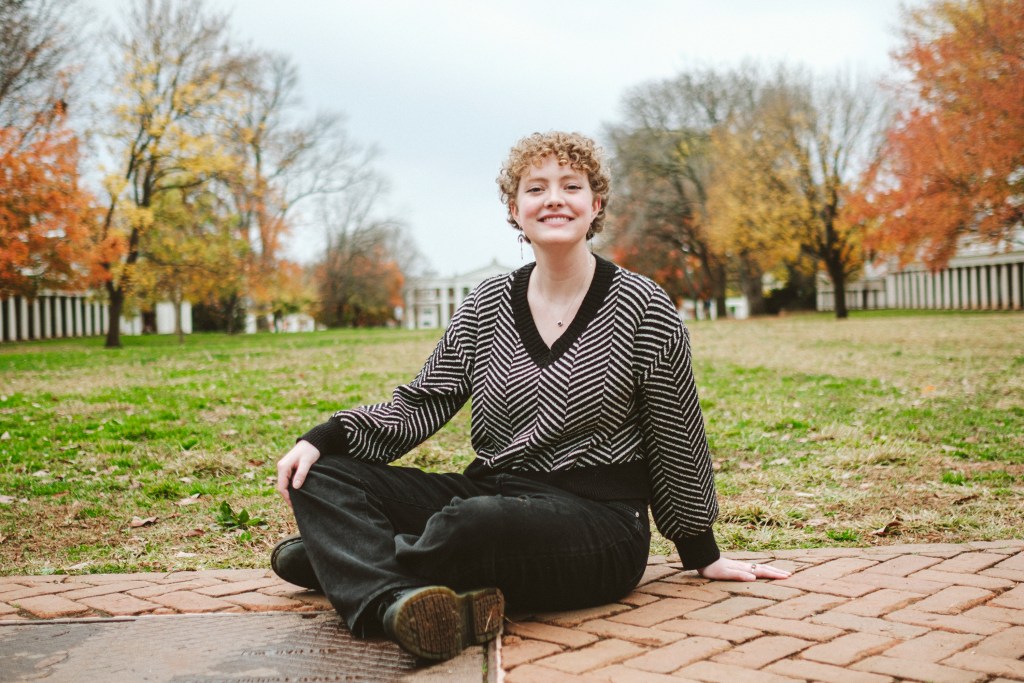
The fact that UVA is dismantling resources meant for these groups sends a message that, when it comes down to it, UVA won’t protect them, Agyei said.
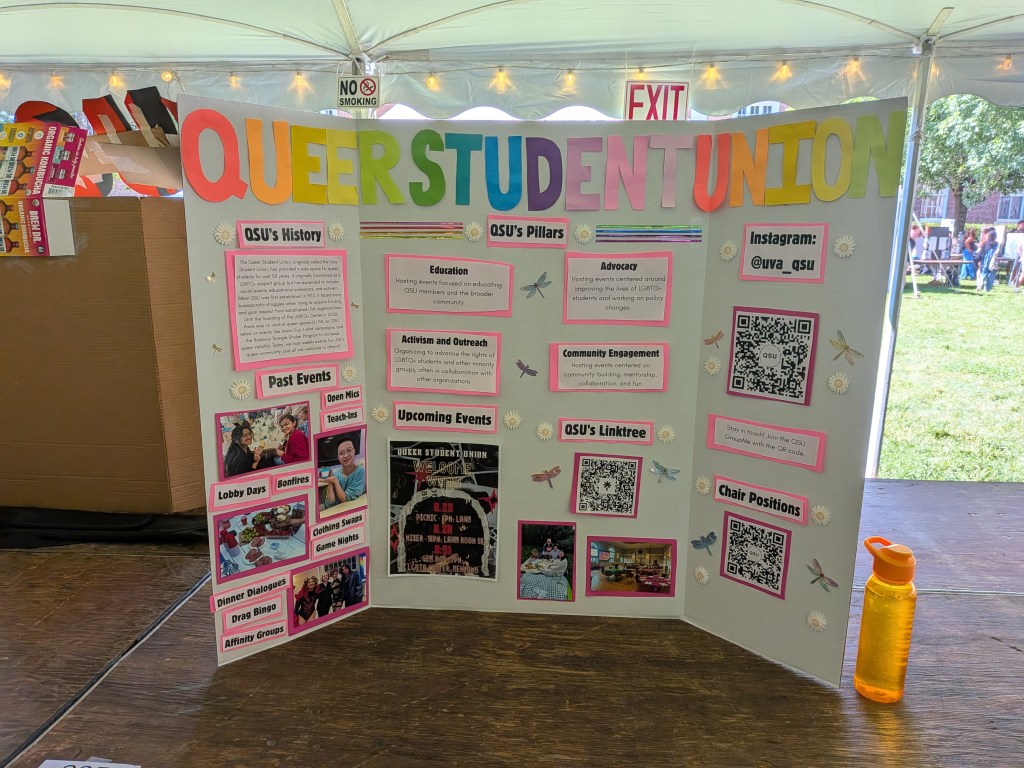
UVA fourth-year and Queer Student Union President, C.J. Ackerman-Garvin, agreed. They said many students — especially from marginalized groups — are upset and discouraged by the rapid, unnecessary dismantling of resources that drew so many to UVA to begin with.
“I remember going to visit the LGBTQ center when I was touring and being just like, ‘Wow, this place exists at a university like this,'” they told Charlottesville Tomorrow. But now, the anti-diversity and inclusion moves have left queer students feeling unsupported, Ackerman-Garvin said.
This year, older students have had to step up to fill the gaps left by the university. Many have taken on the responsibility of providing the programming and support previously offered by UVA, Ackerman-Garvin said. This has only been possible with funding from UVA’s Queer Alumni Network, a nonprofit alumni organization, they added.
“It hasn’t been easy, but it’s really important work,” Ackerman-Garvin said. “We’ve seen a lot of resilience and strength from students willing to step up and do the hard work when the institutions that are supposed to support us are failing us.”
Other affinity groups no longer administered or funded by UVA include the Black Male Initiative and the Black Presidents’ Council. The Black Male initiative focused on academic success, retention and economic empowerment for Black male students, as reported by the Cavalier Daily. The Black Presidents’ Council brought together Black presidents of different university organizations to strategically advocate for and support the needs of Black students.
The Black Presidents’ Council was especially useful in connecting its members to mentorship, grants, scholarships and support within UVA. That helped members build the start of professional networks they could rely on after graduation, former member and UVA class of 2020 alumnus James Banks told Charlottesville Tomorrow.
“Without a platform like BPC, Black students can too easily fall through the cracks,” Banks said. “That can mean dealing with discrimination or isolation from other students or professors without a collective voice, but it can also mean missing opportunities for professional development, funding, mentorship and inclusion simply because the information never reaches them.”
UVA’s diversity and inclusion rollback began at the top after pressure from Trump administration and allies
The decision to end diversity and inclusion programs at UVA came from the very top — and was sped up by state and federal officials.
In March 2025, UVA’s ultimate governing body, the Board of Visitors, unanimously issued a resolution to dissolve the university’s central diversity and inclusion office and related programming. In a highly unusual show of political interference at the university, the resolution had been originally drafted by former Republican Virginia Gov. and Trump ally Glenn Youngkin before it was edited and adopted by the Board, former UVA president Jim Ryan wrote in a Nov. 14, 2025 letter to the Faculty Senate.
UVA spokesperson Bethanie Glover told Charlottesville Tomorrow that the changes outlined in the ongoing reports to the DOJ were taken to “carry out the directives in the Board of Visitors’ March 7, 2025 resolution, to make clear that the University does not discriminate on the basis of protected characteristics, and to ensure that we are in compliance with federal civil rights law.”
Glover said it was not accurate to describe these changes as not being legally required, “because the fundamental purpose of the ongoing Compliance Review is to ensure the University’s compliance with federal civil rights law as reflected in the University’s quarterly reports and certifications.”
However, the Board of Visitor’s resolution dissolving diversity and inclusion programs at UVA referenced and relied on federal guidance that was ultimately overturned by a federal judge in February 2026 because it violated the First Amendment and improperly restricted academic freedom. That means a blanket ban of diversity initiatives at universities isn’t legally required by civil rights laws themselves, lawyers told Charlottesville Tomorrow after UVA signed its deal with the DOJ, but rather by the Trump administration’s interpretation of civil rights laws, which goes beyond what these laws require and has since been overturned.
“This guidance is not grounded in what is the law currently, it is grounded in an ideological interpretation of the law,” Legal Defense Fund Senior Counsel Antonio Ingram told Charlottesville Tomorrow in November 2025. “So the fact that now we have a university adopting a legal interpretation that no court has ever endorsed because of the settlement agreement — I think that’s quite troubling. And it just shows the power of the executive branch to weaponize the Department of Justice to expand precedent beyond the bounds of what courts have ruled just because of the power of intimidation and coercion.”
Rather than leading to “race-neutral” admissions, Ingram added, the adoption of these guidelines — which also ban the targeted recruitment of racial minorities — will ultimately culminate in even fewer students from underrepresented backgrounds gaining access to UVA, a university where white students vastly outnumber every other ethnic group on grounds.
Four quarterly reports have been released publicly by UVA so far, the most recent one on Sept. 30. They list dozens of initiatives and programs that have been cancelled, defunded or are no longer administered by the university. UVA has also ended university funding of identity-based graduation ceremonies and ended certain community outreach programs, among other changes, the reports show.
UVA ends bias trainings, targeted support programs
One change that has been consistent across the reports has been the steady removal of implicit bias trainings, which are meant to help people understand and identify prejudice.
That means there are no more such training sessions for members of the Honor Committee and University Judiciary Committee, student-run organizations that enforce the university’s honor code, adjudicate violations of the university’s standards of conduct through a judicial process and have the power to suspend, expel or otherwise sanction students.
UVA has also eliminated implicit bias training for School of Medicine admissions committee members, among others.
Overall, research has shown that implicit bias training does not provide — on its own — a simple or singular solution to discrimination, or produce large changes to people’s existing prejudices, Calvin Lai, associate professor of Psychology and Criminal Justice at Rutgers University, told Charlottesville Tomorrow.
However, implicit bias training can still give someone a more comprehensive understanding of how prejudice, especially subtler biases, can manifest in different situations, Lai added. It can also introduce people to ideas they may not have considered before and encourage them to reconsider their own actions, Lai said, especially if they hold positions of power. Eliminating the training could leave people less aware of subtle biases that affect how they evaluate others.
At the same time, university-funded or administered initiatives meant to help students facing specific systemic barriers to higher education are now open to all students, regardless of need.
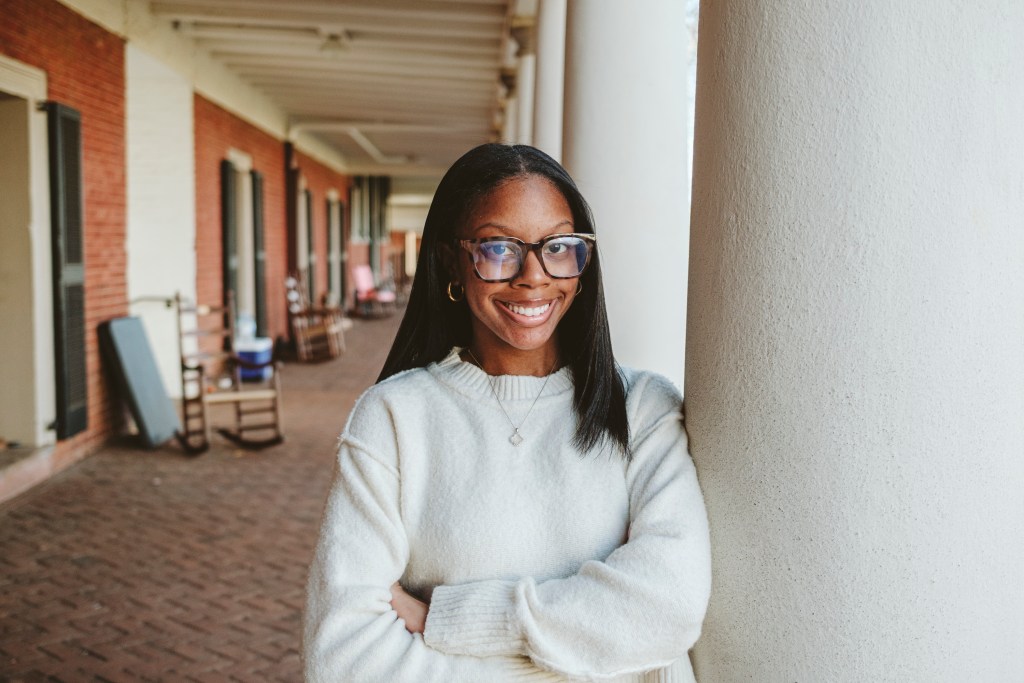
A mentorship program meant to help Black first-year undergraduates navigate the challenges of attending a primarily white institution by pairing them with Black alumni is now open to students of any race. That somewhat defeats its original purpose, first-year master’s student Jaiden Murray told Charlottesville Tomorrow. Murray, who participated in the mentorship program as a first-year, earned her undergraduate degree from UVA in 2026.
“It’s hard to watch something that you worked so hard on, or places that meant a lot to you, or organizations that meant a lot to you, just like, kind of crumble and lose meaning,” Murray, who’s in the School of Medicine, told Charlottesville Tomorrow.
For students navigating a predominantly white institution, she said, having spaces specifically for Black, Asian, Hispanic and other communities made UVA feel more manageable and gave students a sense of belonging. She worries incoming students won’t have access to the same opportunities and communities she relied on.
“It’s not just a title or an office,” Murray said of diversity, equity and inclusion at UVA. “It’s our community. It’s the relationships we made, it’s the people that have been there for us. It’s that feeling that we belong.”