

Beyond the Headlines is our twice-weekly newsletter connecting subscribers directly to our journalists. We add context to major stories, go behind-the-scenes, highlight great work from other local outlets or provide more informal snapshots of our community.
I’m writing from the Rivanna Trail over by Free Bridge near Pantops, where at around 9 a.m., the City of Charlottesville began clearing an encampment that has grown here over the past couple of years.
Between 25 and 30 people remained at the encampment as of this morning, a mutual aid group familiar with the encampment and its residents said.
Many of the tents here are empty, and some have collapsed. The folks remaining have spent the morning like most of us do. Putting on deodorant, getting dressed, brushing their hair, walking their dogs. But they were also packing up their lives. After today, they can’t stay.
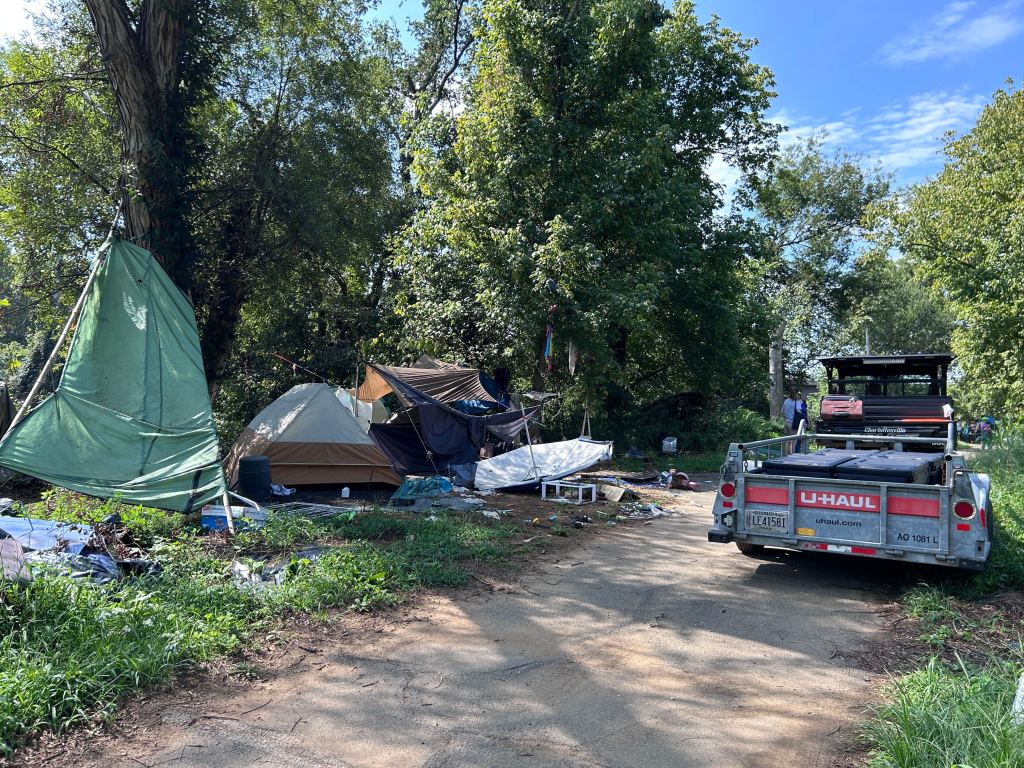
They have few options: leave the encampment or go to an emergency low-barrier homeless shelter still under construction located at 2000 Holiday Drive.
Encampment residents have qualms about the new shelter, which opens today. It will be run by Central Arizona Shelter Services (CASS), a Phoenix-based organization. Residents don’t know CASS and CASS doesn’t know them, some residents have said.
On top of that, there is little public information on how the shelter will be run. The city signed an agreement with CASS six days ago, and while that contract includes information on the city’s expectations for how CASS will operate the shelter, it is not a shelter operating plan.
I have requested a copy of CASS’s plan from the city, but have not yet received it. The city posted a seven-minute video tour of the shelter on its YouTube page Monday afternoon, which gives an idea of what the interior of the shelter will look like.
Two encampment residents, Jennifer Grant and Donnas “Dee” Chambers, told city officials that people won’t go to the shelter if they don’t believe it will work for them. What do they need? Both Grant and Chambers sat down with me recently to tell me:
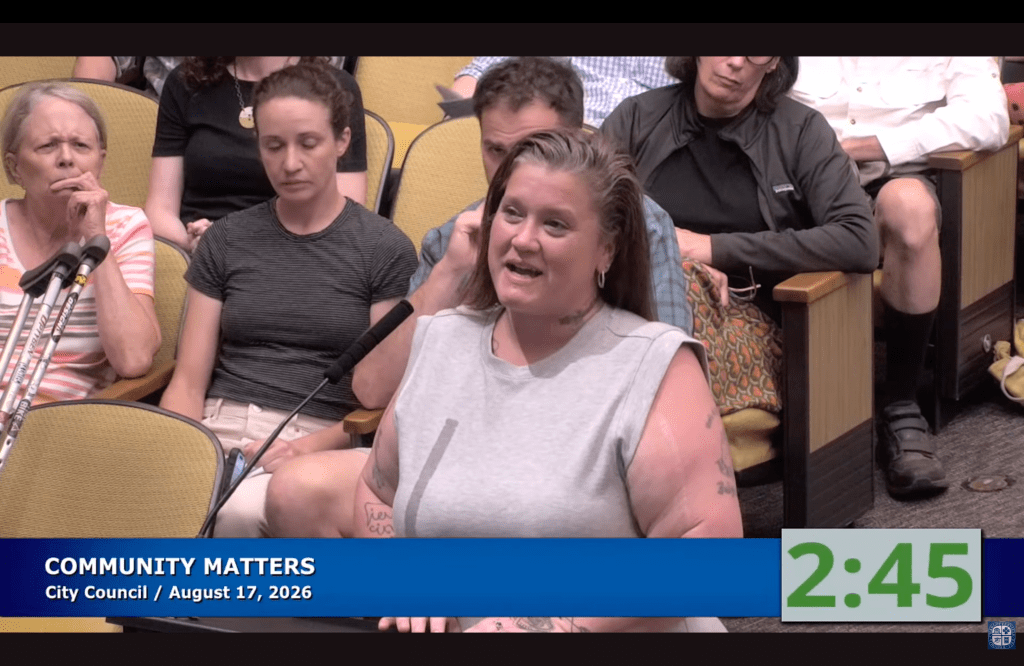
Q&A: Two Rivanna River encampment residents offer their views on how a shelter should be built — and how the city can regain trust
City officials have escalated police presence around Free Bridge in recent weeks and Charlottesville Police Department Public Safety Information Officer Kyle Ervin told Charlottesville Tomorrow in an email on Aug. 24 that “effective September 1, anyone currently on that property is subject to arrest and prosecution.”
That may sound familiar, since exactly one year ago this week, on Sept. 2, 2025, Charlottesville Police Chief Michael Kochis brought to City Council an ordinance to ban camping, sleeping and storing personal belongings on public property.
Community members showed up in droves to oppose the ordinance during the meeting, calling it “cruel,” “inhumane,” “draconian,” and “criminal.” Because there was nowhere for folks living on the streets to go, City Council ultimately voted to table the ordinance indefinitely.
They asked Charlottesville City Manager Sam Sanders to hasten his ongoing search for a shelter spot. That’s how the city came to own the 27,000 square-foot former office building at 2000 Holiday Dr., purchased for $6.2 million last fall. The intention was to turn it into a permanent, year-round low-barrier shelter in partnership with local homeless service providers.
That will still happen, Sanders has said, and providers are working on a plan. Renovations and construction for the permanent shelter can begin while CASS runs the emergency one for the next 12 months.
The shelter project is part of Sanders’ homeless intervention plan, which he presented to City Council in October 2023, when another encampment, this one at Market Street Park in Downtown Charlottesville, formed a month prior.
In September 2023, an officer was accused of kicking someone living in a tent in the park. The officer was later exonerated, and Sanders reimposed a curfew for the park. People and Congregations Engaged in Ministry (PACEM) opened its seasonal overnight low-barrier shelter early to accommodate people displaced from the park.
That happened just a few months after PACEM shuttered its low-barrier shelter at Premier Circle on Rt. 29 S in Albemarle County. That shelter, made possible by COVID-19 pandemic relief funds, was always meant to be temporary. But when it was more successful than even its leaders anticipated, people wished it could stay open, or at least have the model replicated in another location.
I’ll have more on how the rest of today goes. And I’ll be following the city’s progress on a permanent shelter and planning for transitional housing, which Sanders has said are the next items on his list.
Thank you for taking the time to learn about your community.
Erin O’Hare, Neighborhoods Reporter