

On Monday, May 4, four local nonprofit homeless service providers gave their annual “state of homelessness” presentation to Charlottesville City Council.
And they were unhappy to report — once again — that in the past year, the state of homelessness has gotten worse..
Despite increased collaboration among their organizations — the Blue Ridge Area Coalition for the Homeless (BRACH), People and Congregations Engaged in Ministry (PACEM), The Haven and The Salvation Army — and some positive outcomes, more people in the community are experiencing homelessness.
Service providers were pained to have to deliver that news, and city officials looked upset upon hearing it.
“We’ve seen an increase in numbers across the board,” Shayla Washington, BRACH’s executive director, told city officials, a sad expression flashing across her face. BRACH is a nonprofit organization that helps coordinate efforts among the area’s homeless assistance agencies.
“I think the overarching message is, we’re all working together, but there’s still a greater need than what we can achieve as single entities,” said Washington. “It’s increasing incrementally every year. The numbers are not going down.”
That’s clear to many community members, including the most powerful city official.
In the wake of a tent encampment at Market Street Park in late summer 2023, City Manager Sam Sanders introduced a “homeless intervention strategy” in October 2023 and promised a location for a permanent overnight low-barrier shelter, something service providers have been requesting for years.
In late 2025, City Council signed off on the purchase of a building at 2000 Holiday Drive for that purpose. BRACH, PACEM and The Haven are collaborating with city staff on an operating plan for that shelter, which won’t open for a few years.
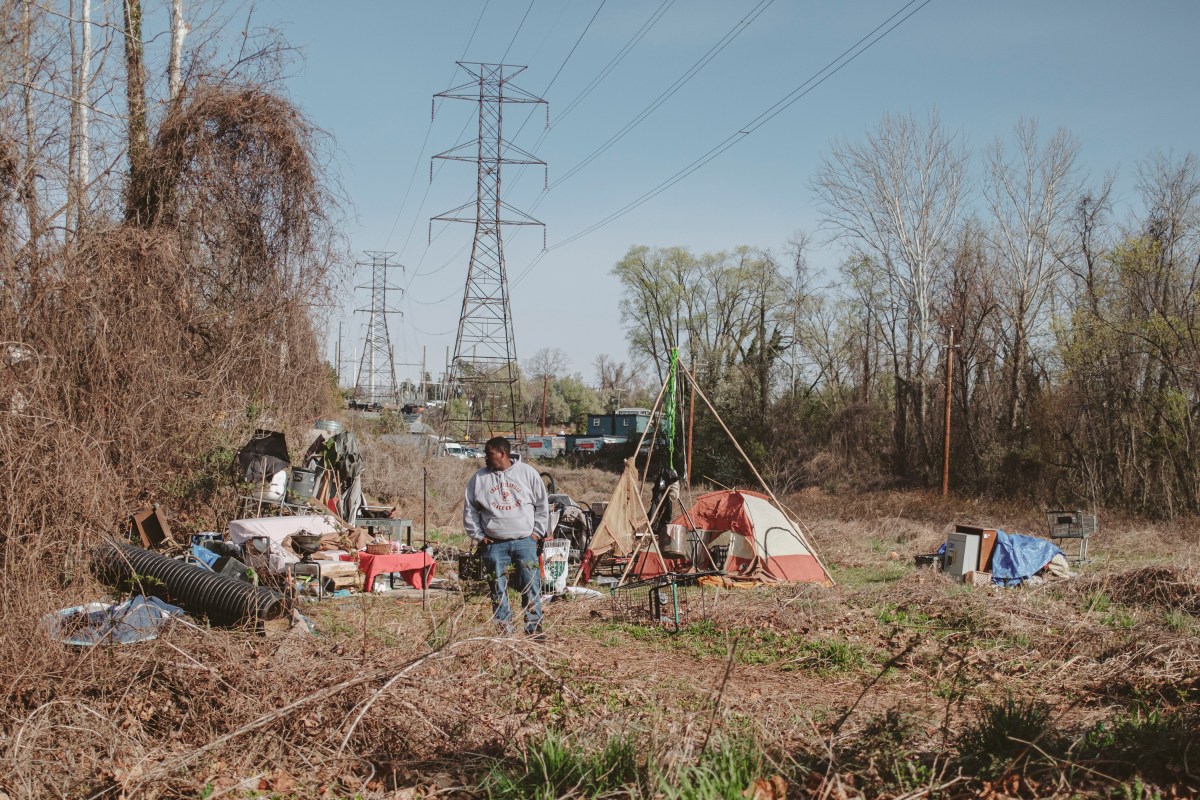
And over the last few months, a tent encampment of dozens of unhoused community members has grown alongside the Charlottesville bank of the Rivanna River, near Free Bridge on Pantops. On top of running their organizations and Holiday Drive shelter planning, service providers are trying to help the city figure out a way to more safely shelter these people.
But service providers have to keep the long view in mind, too, and that requires an altogether different — and more systemic — approach. They have to manage all this with relatively few staff relative to the number of people needing assistance.
Washington and her fellow service providers were clear on what they feel the community needs to address this growing issue: more low-cost housing,housing subsidies and vouchers, rental assistance, case management and mental healthcare. That would require continued coordination between service providers and, because housing subsidies and rental assistance in particular are costly, more money. That money could come from private donors; from taxpayers, if local, state and federal governments chip in; or some combination thereof.
Without those, they said, the number of people experiencing homelessness in the community will probably continue to rise, especially as housing costs increase faster than wages and the federal government moves to drastically reduce funding for housing assistance programs of various kinds, including ones that help lift people out of homelessness.
Despite working together, service providers can’t keep up with demand
At least 703 individuals in the Charlottesville area experienced homelessness of some kind between May 1, 2025 to April 30, 2026. That’s up from 620 the previous year and 571 the year before that, according to BRACH’s data.
That number comes from a list maintained collectively by service providers, called the “By-Name List.” Whenever staff become aware of someone in the community experiencing homelessness, they add that person’s name to the list. Similarly, when someone exits homelessness into housing, staff remove that person’s name from the list.
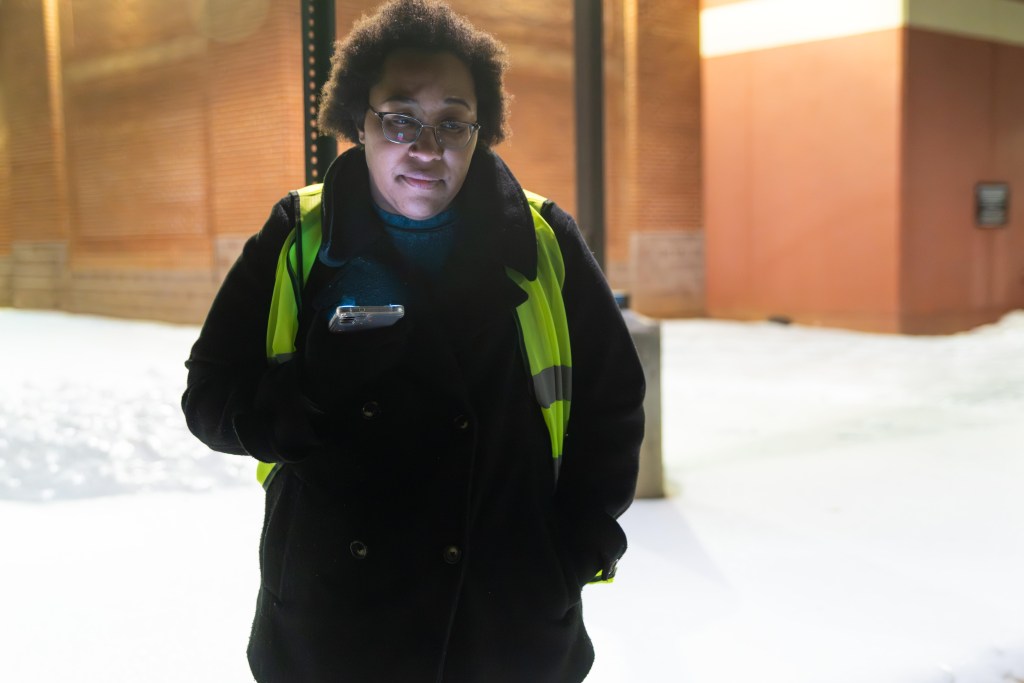
During the May 4 presentation, Washington said she checked the list earlier that day, and 335 names were on it. This number, however, is likely an undercount.
More and more people are falling into homelessness in the community for a variety of reasons, Washington said. One is rising rents — and therefore rising evictions. One-bedroom apartments in Charlottesville cost an average of $1,665 according to Zillow and $1,757 per month according to Apartments.com. But the average monthly Social Security or Social Security Disability payment, which is the only income for many unhoused community members, is $1,500, Washington said.
“People aren’t even making enough to just pay rent, much less the other bills and needs that they have in their lives,” she said.
For those who do have income, there’s not enough housing for them.
“We’re seeing limited affordable and low-income housing,” Washington said. That’s why more people are staying in shelters, longer.
More people are reaching out to the service providers for help, said Owen Brennan, executive director of The Haven, a day shelter at 112 W. Market St. in downtown Charlottesville.
On behalf of BRACH, The Haven runs the Homeless Information Line, a phone-based triage system for anyone experiencing a housing crisis of any kind, be it homelessness or eviction. People who call in to the line are scheduled for an eligibility screening to help direct them to the agency and resource that would be most likely to help them.
The Homeless Information Line received 6,063 calls between April 1, 2025 and March 20, 2026, and staff conducted 713 eligibility screenings in that time period. That’s an increase from 5,000 calls and 600 screenings in the previous year, Brennan said.
Service providers try to help everyone they can, but they don’t have enough resources to help everyone who needs it.
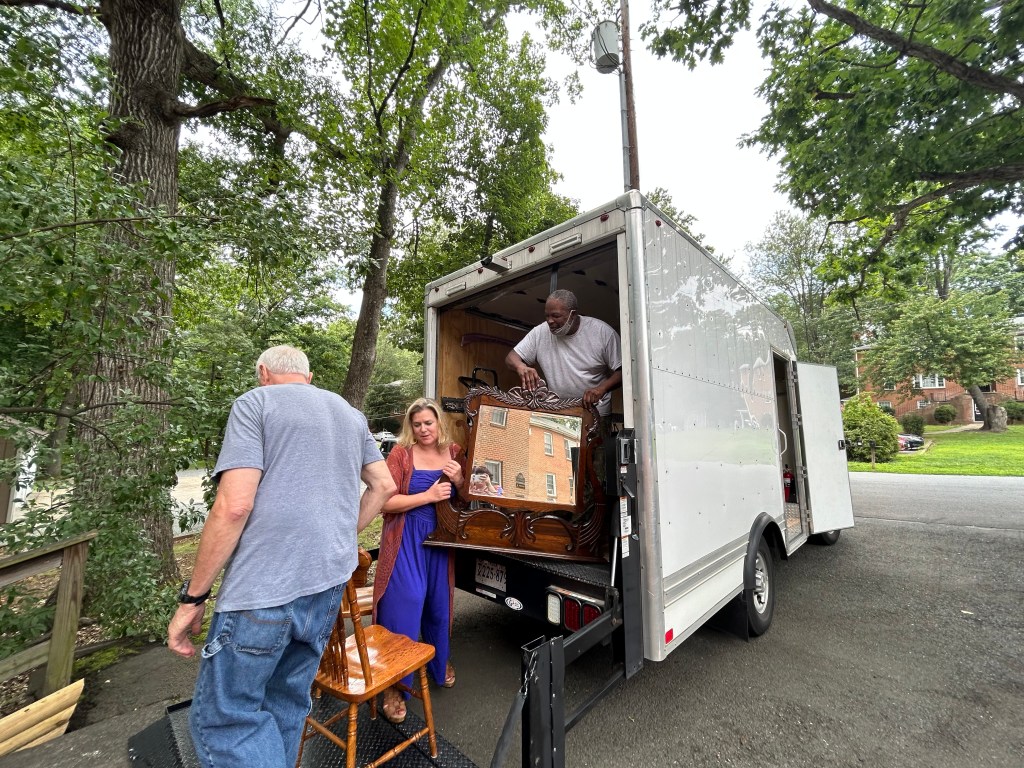
For instance, case managers are often crucial to helping unhoused community members find and stay in permanent housing. They might help someone find a job or apply for Social Security or disability insurance, and help that person find a place to live by looking at listings and talking with potential landlords. And once that person is housed, case managers can help them manage their finances. Some even help their guests move in.
PACEM doesn’t require its guests to accept case management services. But if everyone wanted it, the agency wouldn’t be able to provide it.
“Unfortunately, we just don’t currently have the capacity to give everyone a case manager,” Chambers said. Currently, around 30% of PACEM guests work with case managers. That’s more than 70 clients for PACEM’s two full-time and one part-time case managers.
As the number of people experiencing homelessness in the community grows, some trends remain the same while others are shifting.
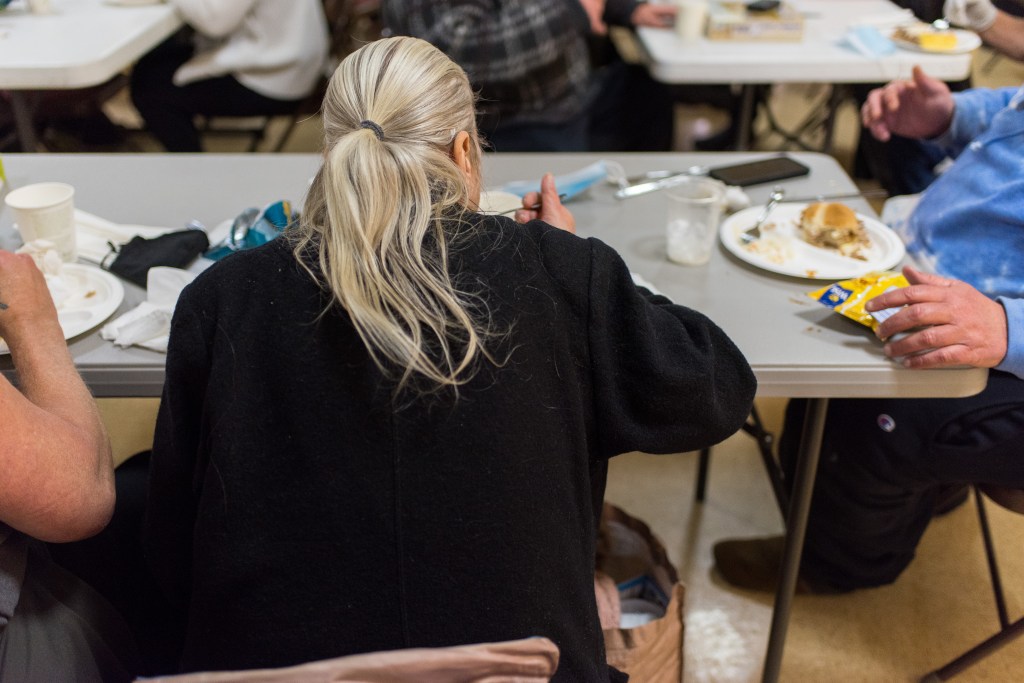
PACEM served 246 adults in its overnight low-barrier shelter during November 2025 and April 2026. That’s fewer than the 298 it sheltered in the previous year, but PACEM Deputy Director Cindy Chambers chalked that up to counting differently. In previous years, the organization counted the folks it sent to The Salvation Army’s warm room, but this past year it did not.
Of those 246 people, most of them (77%) were men, as has been in the case in previous years.
However, 38.6% of those guests were aged 55 or older, a nearly 9% increase over the previous year, Chambers said. That’s one of the factors straining the organization’s resources.
“I can tell you from my team’s work, the needs that folks have when they are older also increase, so this changes what you need out of your team,” she added.
PACEM also served more Black guests than any other race, Chambers said. That hasn’t changed from last year, and it’s indicative of a larger systemic problem.
“If you look at the numbers of our region, about 14% of folks in the Charlottesville metro statistical area report being Black, and yet 42% of the people we serve are Black, which I think just speaks to the housing inequity we are currently facing in our community,” Chambers said.
More than half of PACEM’s guests reported a physical, mental, developmental, chronic and/or substance use disorder condition, and nearly a quarter reported having more than one of those conditions. Mental health conditions were the most common, according to the data PACEM collected. (Chambers now requires Mental Health First Aid training for all PACEM staff.)
Most PACEM guests enter the shelter from homeless or temporary housing situations, and that’s where they go when the shelter season ends, Chambers said. More than half of their guests report having no income at all.
Major Donny Wilson, corps officer leading The Salvation Army shelter on Ridge Street in Charlottesville, said that nearly one-third of the 840 individuals who stayed in the shelter in the past year came out of incarceration.
“They’re looking for ways to reacclimate and reintegrate into the community, and to do that, they need long-term shelter,” Wilson said. “They’re coming in and finding that, but also finding stability and work.”
On average, The Salvation Army receives 50 calls per day seeking some kind of assistance, and between its shelter, food pantry, hot meals, hygiene closet, utility bill assistance and case management programs, The Salvation Army helped 9,653 individuals over the past year, Wilson said.
The agencies also reported some successes.
The Haven helped 274 community members through its housing assistance programs, preventing homelessness for 196 and finding stable housing for 78, Brennan reported.
The Salvation Army helped 103 shelter guests into permanent housing, Wilson said.
On top of that, The Haven, BRACH, and local mutual aid organization the Cville Care Bears provided emergency shelter and food for 109 unhoused community members who would have likely frozen to death during the ice storm that hit the area in late January.
PACEM’s big win was helping 16 people — only one of whom had a housing subsidy — into permanent housing, Chambers said.
But that’s not where the work ends, Chambers said.
“What’s been a challenge for us is stabilizing them in that. They are all just one step away from maybe not being able to pay rent,” Chambers said. For that, they rely on other programs throughout the community, including the city-funded Charlottesville Supplemental Rental Assistance Program, which Chambers encouraged City Council to expand.
“For most of these folks, what they really need is a voucher,” a housing subsidy, she said. “They are spending more than 50% of their income on rent right now.”
Majority of unhoused community members are from the greater Charlottesville area
Over the past few years, City Council has debated which homeless assistance programs to fund, and with how much taxpayer money. They’ve wanted to know: How many unhoused community members are actually from the Charlottesville area?
There’s a common narrative that people are bussed to Charlottesville because it has more resources than other communities, but that’s not necessarily true, said Washington.
“It’s hard to find someone who’s just going to pay money for you to be shipped somewhere else to experience housing instability,” Washington said. “We certainly don’t do that here.” However, if someone comes into the community from another place, local agencies will see if that person has family or friends they can stay with, safely. And if an agency can confirm that, it will get them a bus or train ticket to wherever they need to go, Washington said.
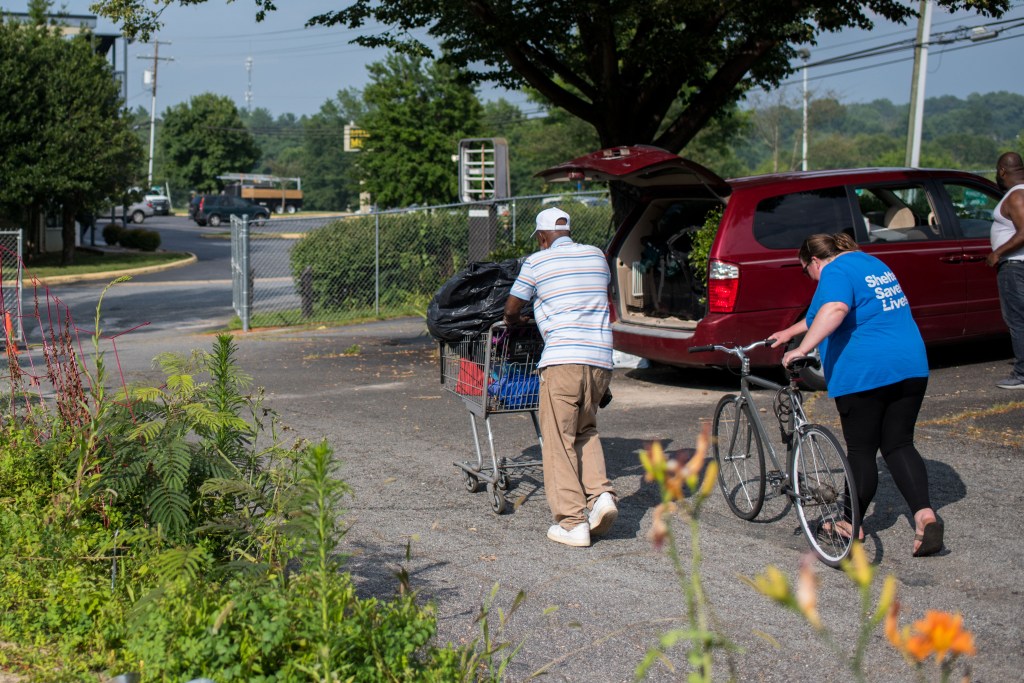
Most folks who service providers interact with are from this area, they said.
Of the 246 adults PACEM served this past year, 85% reported they were from Virginia, with 62% of guests being from the greater Charlottesville area and 42% from the city. People also reported being from Buckingham County, Lynchburg, Augusta County, Staunton, and Harrisonburg.
Of the 333 unsheltered folks that BRACH counted this past year, 122 of them reported their last permanent address. Nearly half of them, 58, were from Charlottesville. Another 21 were from Albemarle County, 3 each from Fluvanna, Nelson and Louisa Counties; 19 from other localities in Virginia; and 14 out of state.
Providers have maintained for at least the last few years that most of the people experiencing homelessness in the community are from this community.
Still, a narrative persists that people come from elsewhere to the Charlottesville area to take advantage of its homeless resources, Washington said.
Councilor Natalie Oschrin asked if there is a geographic limitation for the Homeless Information Line.
There is not, Brennan said. Anyone can call, but they might not be eligible for local services. Of the 731 eligibility appointments staff conducted last year, 54% were for people from Charlottesville, 28% from Albemarle County, and nearly 6% from Louisa, Nelson and Greene Counties. About 10% of the people were from outside the region, and 2% from an unknown locality.
Councilor Jen Fleisher wanted to know how the “outside the region” number compared with the previous year.
Brennan couldn’t say. “I didn’t have good numbers for the previous year. We have done a much better job of capturing data this year,” he said.
Council raises questions over plans, collaboration on proposed Holiday Drive shelter
All of the service providers emphasized the importance of collaboration among the agencies, which they feel is stronger than ever before, especially as they work together on a plan for the proposed low-barrier shelter at 2000 Holiday Drive.
The agencies often help the same clients, but with different things — someone staying at PACEM’s overnight shelter might go to The Haven for a shower and a clinic visit with a UVA School of Medicine student during the day, for instance. A family that calls The Salvation Army for help might get eviction prevention assistance from The Haven.
“I know I’m a broken record here,” Wilson said during his presentation, “but I just want to say how much we appreciate the other agencies, because without their assistance, a lot of these individuals would find themselves back on the street in a crisis situation.”
“We’re collaborating beautifully,” Washington said.
The agencies collaborate not only with one another, but with community groups and local government officials. PACEM relies on churches to provide space, food and volunteers for its seasonal overnight shelter, often at great financial cost to the churches themselves, Chambers said. Churches in the downtown area provide lunch for unhoused community members most days of the week. The UVA School of Medicine hosts a weekly health clinic at The Haven.
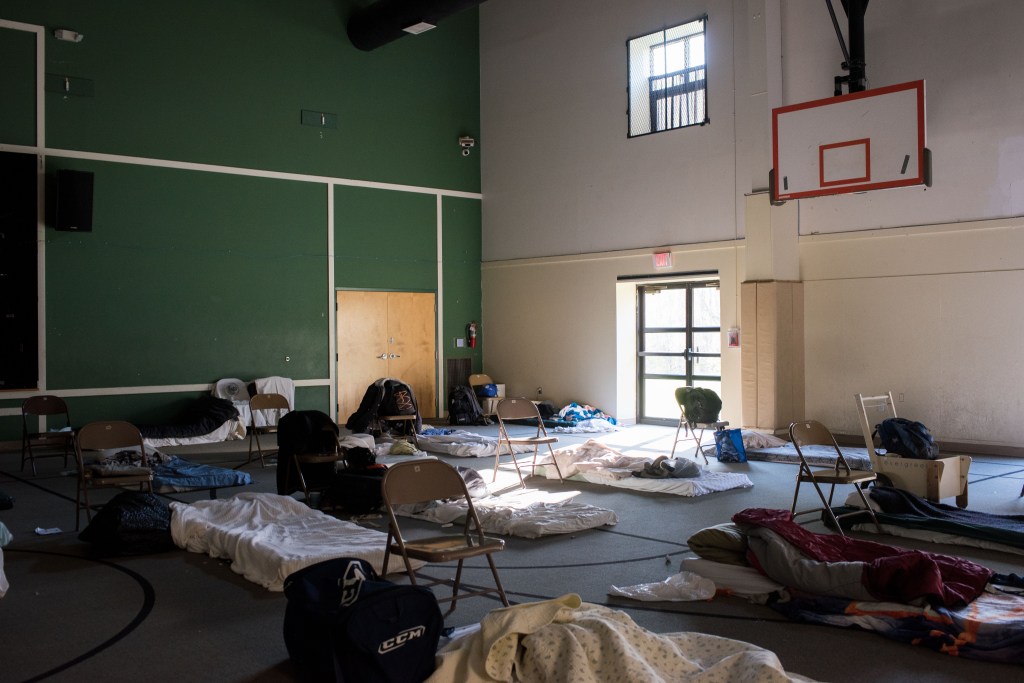
But with the numbers — and the amount of money needed to sustain services — going up, City Council member Lloyd Snook questioned the effectiveness of those collaborations, especially in regards to planning for the 2000 Holiday Drive shelter. The City bought the building late last year for $6.2 million. It will take at least $8 million to retrofit the office building into a shelter, and while City Council isn’t planning to cover all of that, it will be contributing some amount toward it that will be determined once a final plan is agreed upon.
“The broad concern that some of us looking in from the outside have had is that it seems as though the different organizations have fundamentally different ways they think they want to approach the problem,” Snook said. He focused on the fact that eight months after City Council greenlit the Holiday Drive shelter project, he hasn’t seen an official plan.
Project partners had submitted a new proposal for Council’s consideration that same day, Washington said. That puts the ball in Council’s court.
“We need to have one approach,” Snook said after learning that there was a new proposal to consider. “If we’re going to put a bunch of money behind it, potentially millions of dollars, we want to know how it’s going to get spent, we want to know that somebody’s in charge, that somebody’s going to be accountable. We want to see a real organization. What I have been led to believe is that at least so far, there has not been that level of coordination and agreement and perhaps little give-and-take.”
Washington disagrees.
The agencies “are collaborative team players capitalizing on each of our organization’s strengths,” she said in a statement shared with Charlottesville Tomorrow after the meeting. “There aren’t ideological differences in our methodology — we are all rooted in the Housing First model and provide whatever resources we are able to meet the needs of our growing unhoused population.”
“The reality is that we need a funding intervention to expand our scope and clearly define our operational structure for two major projects,” she said, those two projects being the Holiday Drive shelter plan and helping the folks staying in the encampment near Free Bridge, with which the city has asked for help.
“We are hoping the city can provide guidance and clarity to move this work forward,” Washington said.