

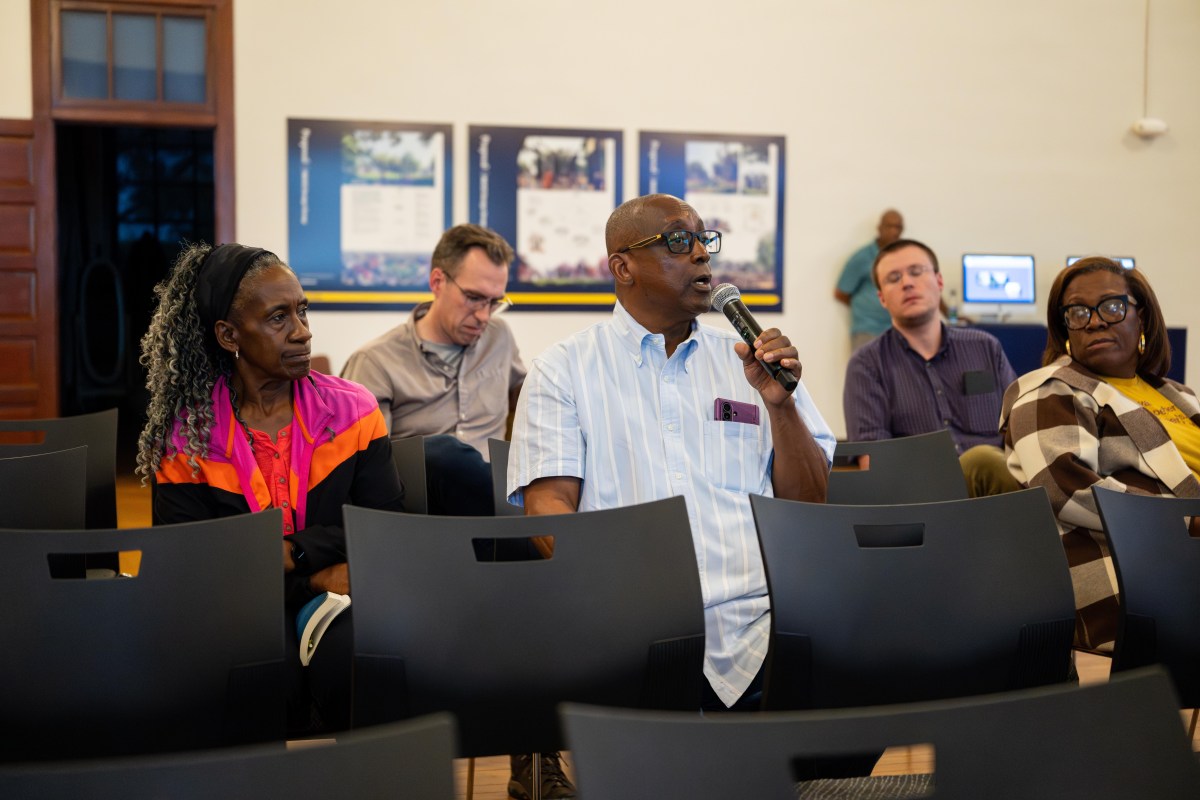
The evening of Sept. 17, 10th and Page Neighborhood Association Vice President James Bryant sat in a chair in the Jefferson School African American Heritage Center auditorium, a microphone in his hand.
“I am overwrought with grief at all of this building going on around us,” he said, his voice measured but full of sadness. “Fifeville, 10th and Page and Rose Hill — our neighborhoods will never be the same again.” Bryant has lived in the 10th and Page neighborhood for 72 years and has watched it change around him.
“I am very saddened that the city has allowed this to happen by changing the zoning code. And I am going to reiterate it over and over and over again,” Bryant said.
In December 2023, Charlottesville City Council adopted a new zoning ordinance that they said would prioritize racial equity and affordable housing while allowing for more density throughout the city. It was the result of years of planning involving city government, community members and consultants, and was adopted after extensive public comment. The new zoning ordinance was also expected to protect the city’s historically Black neighborhoods, the fabric of which has been altered by gentrification over the last few decades.
But since the ordinance took effect in February 2024, plans for luxury student housing — marked by amenities like rooftop pools, fitness centers and cafes — have outpaced plans for other types of residential housing, particularly low-cost housing.

As of Sept. 8, 2026, there were 1,072 city-subsidized affordable units in the construction pipeline, according to Housing Program Manager Madelyn Metzler’s 2026 Affordable Housing Report presentation to City Council. A “unit” of housing can refer to a house, a mobile home, a studio apartment, a five-bedroom apartment, or any other type of separate living quarters. Those units in the city pipeline are primarily apartments and townhomes that are part of large redevelopment projects led by nonprofit developer Piedmont Housing Alliance (which is redeveloping Kindlewood, among other sites) and the quasi-governmental Charlottesville Housing and Redevelopment Authority.
In contrast, there are more than 1,400 units (with enough beds for at least 4,400 students) of student housing in the pipeline in the city. Some of it (235 units, about 780 beds) is under construction by the University of Virginia. The vast majority of it is being built by for-profit private developers.
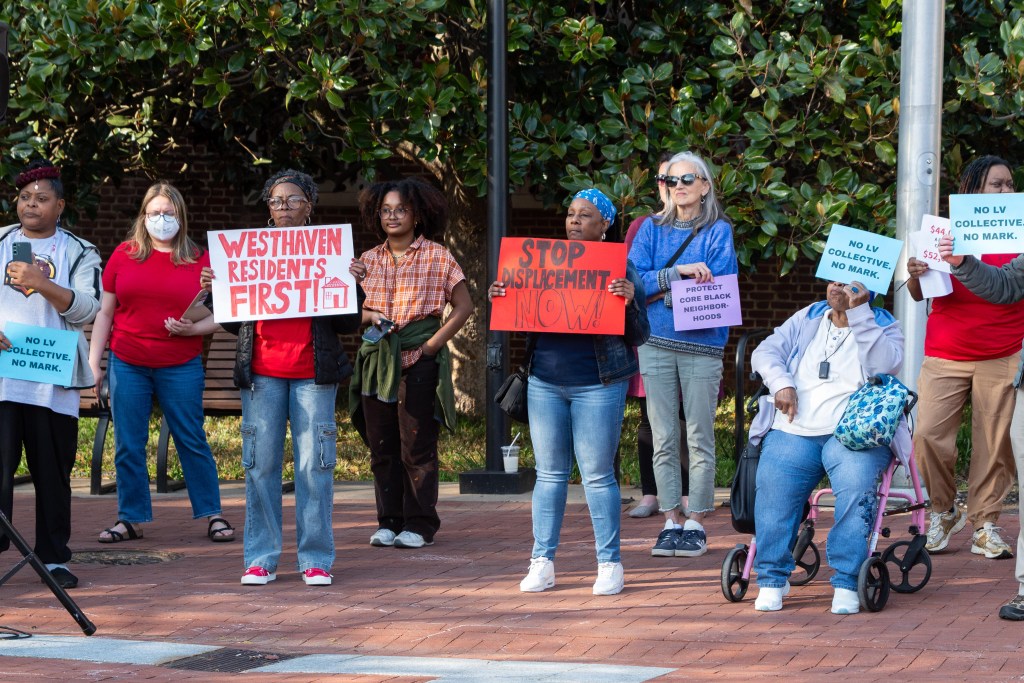
Two luxury student housing developments have been proposed — and approved by the city — in two historically Black neighborhoods. LV Collective’s building on West Main Street in 10th and Page, and Landmark Properties’ The Mark in Fifeville.
For developers like LV Collective, construction under the city’s zoning ordinance is a matter of economics. Due to the cost of building higher-density housing in the city — including high construction costs and land prices — they don’t believe they can make a profit that their stakeholders will accept unless they target more affluent renters or buyers. And generally speaking, student housing is more profitable to build in the city.
For residents of historically Black neighborhoods, development under the ordinance goes beyond money. It could mean the loss of their homes, their neighborhood and their history.
‘Whatever rules exist, developers are going to meet whatever those rules are, and they’re going to seek to maximize profit’
In an attempt to encourage the development of low-cost housing in Charlottesville, the city implemented an “inclusionary zoning” policy in the new zoning ordinance. Inclusionary zoning looks different from locality to locality, but broadly, these policies either require or encourage developers building new units of any kind to reserve some of those units for lower-income households.
Take action
Find housing resources for Charlottesville and Albemarle County
Are you unhoused, a renter or a homeowner who needs help? Find local agencies and programs to connect with in Charlottesville and Albemarle County in Charlottesville Tomorrow’s Housing Resource Guide.
Charlottesville’s inclusionary zoning policy mandates that all residential developments with 10 or more units must do one of two things.
One option is to make 10% of the development’s units accessible for households at or below 60% of Area Median Income (AMI), which is determined by the U.S. Office of Housing and Urban Development using income data for different areas around the country. In the Charlottesville area, which includes Albemarle, Fluvanna, Greene and Nelson Counties, for 2026, 60% AMI for a one-person household is $58,716; $67,104 for a two-person household; and $83,880 for a four-person household.
In Charlottesville, a lot of people need those affordable units. Overall, 20% of households in the city earn below the federal poverty line, according to U.S. Census Data. In 2026, that’s $15,960 for an individual, $21,640 for a two-person household and $33,000 for a family of four, according to the U.S. Department of Health and Human Services, which sets those thresholds annually.
An additional 28% of households earn above that amount, but struggle to afford basic needs, according to the July 2025 City of Charlottesville Community Wellbeing Profile compiled by the UVA Center for Community Partnerships and the city’s Office of Social Equity. That’s nearly half of all households in the city, and Black and Hispanic households make up a disproportionate share of those households.
In order to be considered “affordable,” the proposed units cannot cost more than 30% of a household’s income.
Developers’ second option is to pay an “in-lieu fee.” That money goes into the Charlottesville Affordable Housing Fund, and City Council uses it to pay for a variety of low-cost housing initiatives across the city. The ordinance provides two different calculations for determining in-lieu fees, one for regular residential housing and one for student housing.
The zoning ordinance defines “student housing” as residential construction that rents by the bed and is located within one-half mile of the edge of UVA’s Central Grounds.
LV Collective’s proposed building meets those conditions.
However, student housing developments pay about half as much as a regular residential project when it comes to in-lieu fees, Charlottesville City Councilor Michael Payne explained to Charlottesville Tomorrow. All told, LV Collective will pay about $4 million, instead of $8 million, into the Affordable Housing Fund.
Payne isn’t happy about that.
“It doesn’t actually make sense, because student housing is the most profitable type of housing to build in Charlottesville,” and therefore the zoning ordinance essentially incentivizes building student housing over other housing, he wrote in an email. On top of that, housing developers are still choosing to pay the in-lieu fee because it is still less costly than providing on-site affordable units.
The in-lieu fee is also more appealing to for-profit developers because it is far more difficult to make a profit with affordable housing units, said Minjee Kim, Assistant Professor in the Urban Planning Department at the University of California Los Angeles Luskin School of Public Affairs. Her research focuses on how planners and policymakers can collaborate on equitable real estate development.
“Why are they not responding to the affordable housing needs? Money,” she said. “Nationwide, it is extremely difficult to build naturally affordable housing. Housing construction costs are so expensive right now, and developers have to collect rent, or sell homes, for more than what it cost to build them.” That’s why most of the development happening throughout the country is at the luxury level, she said.
And that’s not unique to Charlottesville — that’s everywhere, Kim said.
Payne thinks that both the half-mile radius and the lower in-lieu fee for student housing are a mistake that City Council must correct by amending the zoning ordinance.
“The half-mile radius was meant to limit the geographic scope of student housing, specifically to provide a guardrail of some kind on how deeply UVA encroaches into non-student neighborhoods,” Payne wrote. Drawing that boundary was up to the city’s zoning administrator, Read Brodhead.
During a March 19, 2026 Board of Zoning Appeals meeting, Broadhead explained that he used a variety of current and historic city and university maps to determine the boundaries of Grounds. From there, he determined the areas of the city that are within one half-mile of those boundaries.
However, those areas include large sections of historically Black neighborhoods, including most of 10th and Page and a significant chunk of Fifeville.
In Payne’s opinion, that undermines the actual policy intent of the half-mile radius.
For over a year, Payne has advocated changing the zoning ordinance to correct these mistakes and others, including the lack of meaningful input these neighborhoods can have on developers’ plans. To do so, a majority of City Council — three of its five members — must be on board. So far, that hasn’t been the case. Most have different ideas of why and how the ordinance should be modified.
For instance, Councilor Lloyd Snook has said that he is open to reviewing how the zoning ordinance treats historically Black neighborhoods like Fifeville and 10th and Page. Vice Mayor Natalie Oschrin, who has advocated multiple times for more housing, no matter the type, wants to see more mixed-use commercial areas, things that make neighborhoods like Fifeville and 10th and Page attractive to live in and therefore attractive to developers. That way, “development pressures can spread out,” she has said.
Mayor Juandiego Wade shares some of Oschrin’s views. He believes that if more housing is built, it will ultimately reduce the overall cost of housing throughout the city. If there’s more supply, there will be less demand.
Payne doesn’t think that student housing developments should be treated differently than other residential buildings, he said during the Sept. 17 meeting. He asked Brittani Sanders, LV Collective’s Vice President of Entitlements and Development Strategy, if LV Collective would consider contributing $8 million, instead of $4 million, into the Affordable Housing Fund, to make a bigger impact on the city’s ability to provide the type of housing residents say they need.
“It’s not feasible,” Sanders said.
“Your investors won’t allow that,” is what Payne said he understood her response to be. “You are going to pursue what is profitable for you under the rules that exist.”
Sanders said that LV Collective “doesn’t do” affordable housing. The company exclusively builds student housing and some multi-family housing, according to the portfolio on its website.
Payne said that his critique wasn’t of LV Collective, but of the zoning ordinance.
“My concern is that, whatever rules exist, developers are going to meet whatever those rules are, and they’re going to seek to maximize profit,” Payne said.
If City Council wants to address racial equity like it claimed it would do with the zoning ordinance, then the council has to think “much deeper” about land acquisition and development, especially in historically Black neighborhoods, Payne said.
“Building market-rate housing will not benefit 10th and Page, Rose Hill, Fifeville, and it will not address racial wealth gaps,” Payne added.
The city, consultants and community members began work on the current zoning ordinance in 2019. Along the way, the group determined that the old one had too many regulations and too many hoops for developers to jump through. It slowed down the process, they said, and it prevented a lot of housing from being built. They sought to correct that in the current ordinance.
But maybe the city overcorrected, Assistant Professor Kim said.
For instance, under the previous ordinance, a development the size of LV Collective’s student housing project would have required a special-use permit (SUP). Only City Council could issue SUPs, and city code required two public hearings on a SUP before Council could vote on it. During those hearings, there were public comment periods where community members could tell City Council their opinions on the matter.
That’s not the case anymore, as these large projects can move ahead without input from neighboring residents who will be affected.
A SUP can be an effective zoning tool, and the city could return to something like that, even just in these neighborhoods, Kim said.
“Deregulation isn’t always the best,” Kim said. “If the city does that, it is completely letting go of its leverage. In places that are going through extreme gentrification, the city is better off with some level of leverage.”
10th & Page, with roots in Charlottesville’s Black history, has changed
For generations, most of the neighborhood’s residents have been Black. That’s because a large part of the present-day 10th and Page neighborhood was established by a Black man.
John West was born enslaved and emancipated himself during the Civil War, when Union Troops arrived in Charlottesville in March 1865. He was about 15 years old.
West became a successful businessman, and by the turn of the century, he was “one of the wealthiest land-owning residents Charlottesville has ever seen,” according to Mapping Cville research led by Jordy Yager, digital humanities fellow at the Jefferson School African American Heritage Center. Mapping Cville is a project chronicling which properties in Charlottesville and Albemarle County had deeds restricting land ownership based on race.
West owned half of Afton Mountain, 500 acres in Barboursville and more than 90 properties in Charlottesville, including multiple houses and a storefront along West Main St. and a building next to the Paramount Theater on Third Street NE.
He subdivided his properties in the city and sold them to Black individuals and families.
Some of those properties made up the majority-Black Vinegar Hill neighborhood, a residential and commercial hub that the city bulldozed in 1963 in the name of “urban renewal.” Other properties were located in what is now known as 10th and Page.
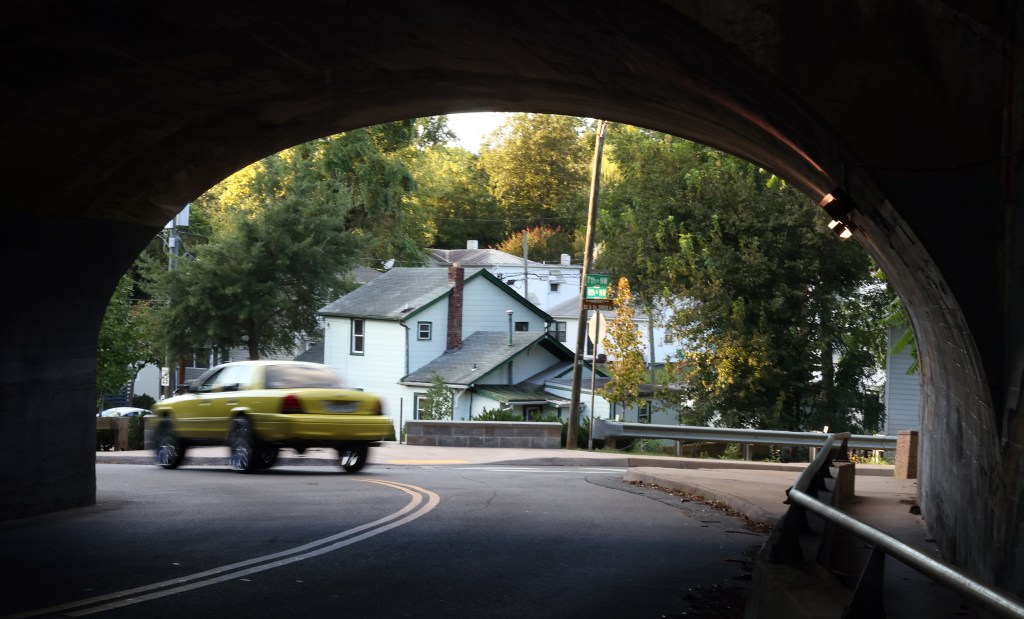
West died in 1927, and other prominent Black residents such as the Rev. Charles H. Brown and Eugene Williams followed in West’s footsteps, building and rehabilitating homes throughout the neighborhood and selling or renting them to Black families.
James Bryant and many other 10th and Page residents are proud of this history and tell it often. It is a story about how Black residents have not only succeeded, but thrived en masse in Charlottesville. They’ve done so despite policies like the city’s segregated housing ordinance of 1912 and the discriminatory lending practices of banks and financial institutions that made it much harder for Black residents to buy land, Mapping Cville research points out.
In the last few decades, the 10th and Page neighborhood has changed, according to residents’ accounts in a C-VILLE Weekly report from 2017, as well as U.S. Census data analyzed by Charlottesville Tomorrow.
The way it’s changing has residents worried that the neighborhood’s history will be forgotten — over time, the neighborhood has gentrified and residents frequently talk about longtime Black residents who have been pushed out by high property taxes due to rising property values.
Current residents worry they could be next. Residents like James Bryant, who, throughout his career as a teacher and counselor with Charlottesville City Schools, educated hundreds of local children.
In 2013, more than three quarters of 10th and Page residents were Black, and about one-fifth (20%) were white (not Hispanic). But by 2022, that changed to just under half of residents identifying as Black (47%) and 43% considered themselves to be white (not Hispanic).
The raw numbers tell us more about the shift: From 2013 to 2022, the number of Black residents in 10th and Page actually rose, from 658 to 821. But the number of white residents grew by a much larger margin, from 171 to 750. So, while the neighborhood still has one of the largest percentages of Black families in the city, white residents are making up an increasingly larger share of the neighborhood population. Gentrification, rising housing costs and more than 1,600 beds of student housing constructed since 2014 are all contributing to the 10th and Page’s changes, according to a city neighborhood fact sheet.
Additionally, for decades, residential property sale prices in 10th and Page lagged behind those of the city overall, often by a margin of around $100,000. But that margin is closing: By November 2021, the median residential sale price in 10th and Page was nearly the same — about $16,000 less — as that of the city overall, according to Census data.
‘Why is Charlottesville such a hot spot for you?’
Throughout the meeting, the neighborhood wanted to know: Why Charlottesville? And more specifically, why this neighborhood?
LV Collective is an Austin, Texas based company that specializes in multi-family and off-campus student housing. It has $6 billion in assets across 11 states, according to a presentation by the company at an August 2025 Board of Architectural Review meeting.
The company plans to build 182 units of luxury student housing at 835, 843 and 847 West Main St. Together, those lots currently form a parking lot sandwiched between the 7-story Yugo Crestline (formerly The Standard), the railroad tracks and Westhaven, the city’s oldest and largest public housing community. The planned building will be 8 stories tall, 6 stories on the side facing Westhaven, a change the developer agreed to after both the Board of Architectural Review and the neighborhood pushed back on the height. Originally, LV Collective intended to build an 11-story building.
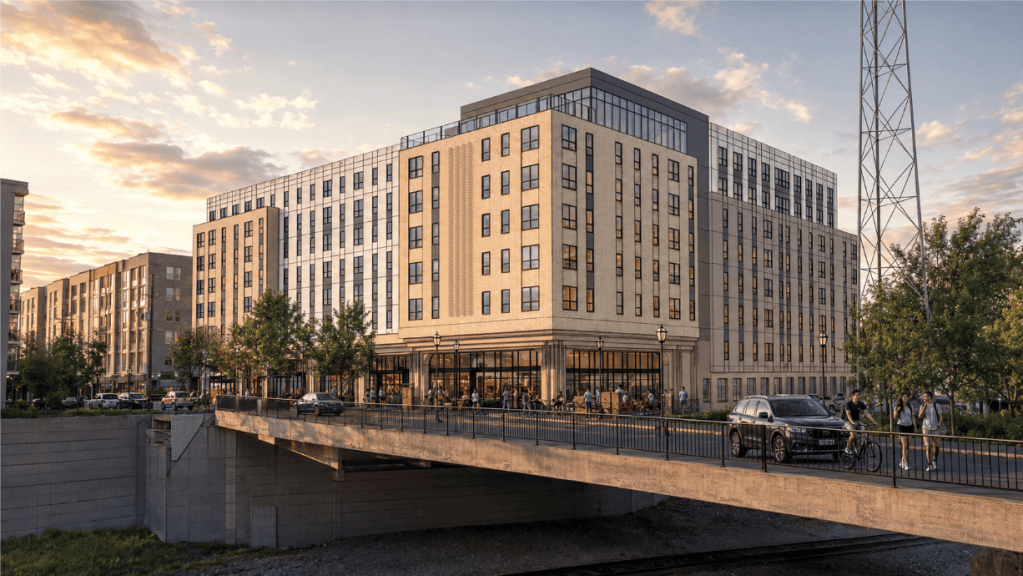
All told, the building will have about 520 bedrooms, 49 parking spaces, a cafe and a fitness center.
Many 10th and Page residents, as well as residents of nearby Fifeville, have repeatedly said they don’t want construction of the building to proceed. But, LV Collective has permission from the city to build, and community members wanted to know why the company will move forward despite residents’ objections.
“Why is Charlottesville such a hot spot for you?” asked Zyahna Bryant, who grew up in the neighborhood. She is a current member of the Charlottesville City School Board, but said she was not attending the meeting in that capacity. Instead, she said she was attending and speaking as a community member. “What do you know that the people in this room do not know?”
“I get to see almost every Division I college town out there, and what makes Charlottesville special? People keep coming here,” LV Collective’s Sanders replied. “It’s stable. It has a downtown life outside of the university. Equity is attracted to that.”
Equity matters, Sanders said, because projects like this one are about 60% funded by bank loans and 40% funded by equity partners — individuals and private equity firms that contribute money to the project and expect a return on their investment. Banks also seek a return on their investment by charging interest on the loans, and without the equity partners, the loan seems too risky and banks are less willing to make the loan at all.
When the company began work on the project, it did not understand the location, Sanders said.
“It is understood now,” she added. Sanders has represented LV Collective at various community meetings in recent months, regularly hearing residents’ concerns and opinions.
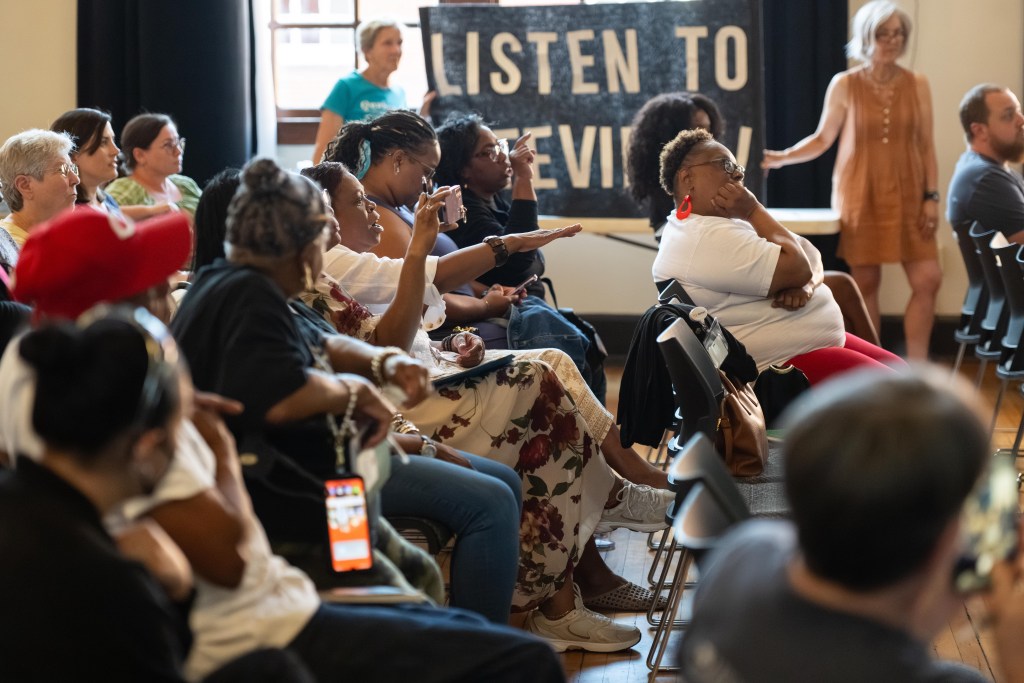
Throughout the Sept. 17 meeting, Sanders outlined the economics of the project to the community while the neighborhood tried to convey how they felt the project would damage their community and their lives.
The company is very close to not having the project financed, after spending millions of dollars so far, Sanders said.
It’s an expensive project, she said, without disclosing its cost. Charlottesville Tomorrow was unable to find a published cost for the project, but found information on a few other recent LV Collective builds. A 476-unit mixed-use multifamily project in East Austin, Texas, cost about $106 million, according to The Real Deal, a trade publication for real estate professionals. A 379-unit student housing project in Columbus, Ohio, cost $138 million, according to the project engineering firm’s Instagram account.
The land for the Charlottesville project was expensive, and when it’s complete, LV Collective will only own half of it — the company will have to pay in perpetuity for a ground lease for the rest, Sanders said.

An inclusionary zoning analysis conducted for the city in 2023 by RKG Associates, an economic planning and real estate consulting firm in Alexandria, Virginia, predicted high costs for buildings like this.
“The cost of construction for buildings over 5 stories has reached a point where even student-targeted rental housing — which generates substantially higher PSF [per square foot] rent levels than more traditional rental developments — currently is not financially feasible without some mitigating cost offset (e.g., lower land prices),” the consultants wrote.
The reduction in height from 11 stories to 8 following the requests from residents and the Board of Architectural Review meant fewer units, and fewer units means lower profit, Sanders said.
“If you can’t do the height to get the money, the bank doesn’t like that, private equity doesn’t like that, because it makes it seem like they won’t get their money back,” Sanders said in the community meeting. Typically, developers use the money earned from rent to pay back the loans they took out to construct the building. In turn, rents are affected by how expensive a project is to build. More expensive projects mean higher rents to pay out for a developer and its investors.
That’s not what the neighborhood wants. It wants affordable housing, residents at the meeting said.
“We need affordable housing,” the Rev. Jessica Jackson, Associate Minister at First Baptist Church on West Main Street, told Sanders. “The very least that you all could have done was put some affordable housing in there.”
The site won’t support affordable housing, according to Sanders. “Land value drives what you can build on the site,” she said. “Even if we go away, the land is so expensive that it will not support affordable housing,” she said. “Nothing has been built on it because it does not work.”
“I don’t buy it,” said Zyahna Bryant. She refused to believe that offering 10% of the units as affordable — something the zoning ordinance mandates for projects that are not classified as “student housing” — would sink the entire project.
Residents also asked for a monetary contribution to establish a neighborhood stabilization fund. A resident committee would decide what to do with that money, and they envision it could go to things like home repairs, tax relief and education funds for young residents.
LV Collective plans to write a check for $400,000 for a fund like that on top of its $4 million contribution to the city’s Affordable Housing Fund, Sanders said. It is unclear how LV Collective came up with that number. Charlottesville Tomorrow reached out to Sanders to ask, but she was away on leave and not available for an interview before publication.
“You can’t put a $400,000 price tag on community benefits, or some neighborhood fund,” Zyahna Bryant said. “That’s not good enough for the change in quality of life that’s going to happen for these neighbors.”
Sanders said LV Collective can’t offer more.
“Our company has spent millions trying to get where it is” on this project, Sanders said. “And it’s going to be a tough pill to swallow to just write that off for a project that won’t get capitalized.”

“That makes perfect sense,” Bryant replied as other community members shook their heads at Sanders.
Sanders told residents that she has asked other developers to join LV Collective in contributing to a community stabilization fund, and has asked City Council to match those contributions. Additionally, she said she hopes that the company’s $4 million contribution to the Affordable Housing Fund will be invested directly into the neighborhood and close a funding gap for Westhaven’s ongoing redevelopment.
“We can make a lot more difference with that $4 million in cash than with units we’d be able to build on site,” Sanders said.
However, there is no funding gap for Westhaven, Charlottesville Redevelopment and Housing Authority Executive Director John Sales told Charlottesville Tomorrow in an email on Oct. 6.
“I don’t know where this came from,” he wrote.
UVA houses about a quarter of its students on grounds; for-profit developers fill in the gap
The city’s own Affordable Housing Plan, adopted in 2021, warned of the very development pressures 10th and Page, Fifeville and Rose Hill are facing.
“Land use changes can be difficult to implement and have limited ability to impact housing accessibility for the lowest income residents. The plan must acknowledge that land use tools…will not decrease rent [and] may create unintended development pressures,” reads page 78 of the plan.
“Increasing the development allowable by right makes land more valuable and attractive to investors,” the plan states. “This can cause displacement pressures, particularly in neighborhoods with a high percentage of renters. Up-zoning must therefore be undertaken primarily in areas where these pressures will be limited.”
The 10th and Page neighborhood is 84% renter-occupied, one of the highest rates in the city, after Starr Hill, Venable (both of which are 86% renter-occupied and adjacent to 10th and Page) and Jefferson Park Avenue (91% renter-occupied), according to neighborhood fact sheets on the city’s website.

So far, much of that development pressure is coming from off-campus student housing like the LV Collective building and The Mark.
In fall 2025, the most recent data available, UVA had a total on-Grounds enrollment of 26,685 students, including 17,848 undergraduate and 8,837 graduate students, according to UVA’s Office of Undergraduate Admission. UVA houses a fraction of those students on Grounds — about 6,800 — according to a Feb. 2026 report from The Cavalier Daily. Currently, all 4,000 or so first-year students are guaranteed housing, and upperclassmen wanting to live on Grounds compete via lottery for the remaining rooms.
That leaves about 20,000 students who need a place to live in and around Charlottesville, and many of them choose to live in the neighborhoods closest to UVA.
In 2019, UVA’s then-president Jim Ryan pledged to house all first- and second-year students — about 8,000 total — on Grounds by 2030. UVA is currently building a large complex to house between 750 and 800 upperclass students on Ivy Road in Charlottesville, plus space for 340 Darden School of Business students in Albemarle County.
Local landlords and for-profit real estate companies have stepped in to fill the gap, and the latter is becoming more prevalent. Since 2014, more than 1,600 beds of student housing have been added in the 10th and Page neighborhood alone, according to a city neighborhood fact sheet.
There are thousands more beds of student housing currently under construction throughout the city, according to a presentation former Director of Neighborhood Development Services Kellie Brown gave to City Council in January 2025 The Verve on Stadium Road, Aspen Heights on Jefferson Park Avenue, 1117 Preston on Preston Avenue and The Blume on Ivy on Ivy Road.
Combined with UVA’s construction, as well as the plans for The Mark and the LV Collective building, there are 4,700 beds of additional student housing in the pipeline, about 4,500 of them in the city.
‘A very clear sign of the stereotype of gentrification’
Some officials, including Mayor Wade, believe that building more housing geared toward students will draw students out of residential neighborhoods, and families will move back in.
“We want more housing. In my mind, more housing is good because wherever the students are now, they’re going to leave those places and move into those new units and those [old] units will become available,” Wade told Charlottesville Tomorrow in March. He believes that if more housing is built in the city, more housing options will open up, and the market will respond with lower prices.
Wade and others cite the results of a study conducted by the Weldon Cooper Center for Public Service for Charlottesville City Schools in the 2010s. The school division noticed an unusual increase in enrollment in the mid-2010s and asked the Weldon Cooper Center to help figure out why.
The study itself was never released publicly because it contained private student data that couldn’t be made public, former Planning Commissioner Rory Stolzenberg told Charlottesville Tomorrow, but it has been referenced in various meetings since.
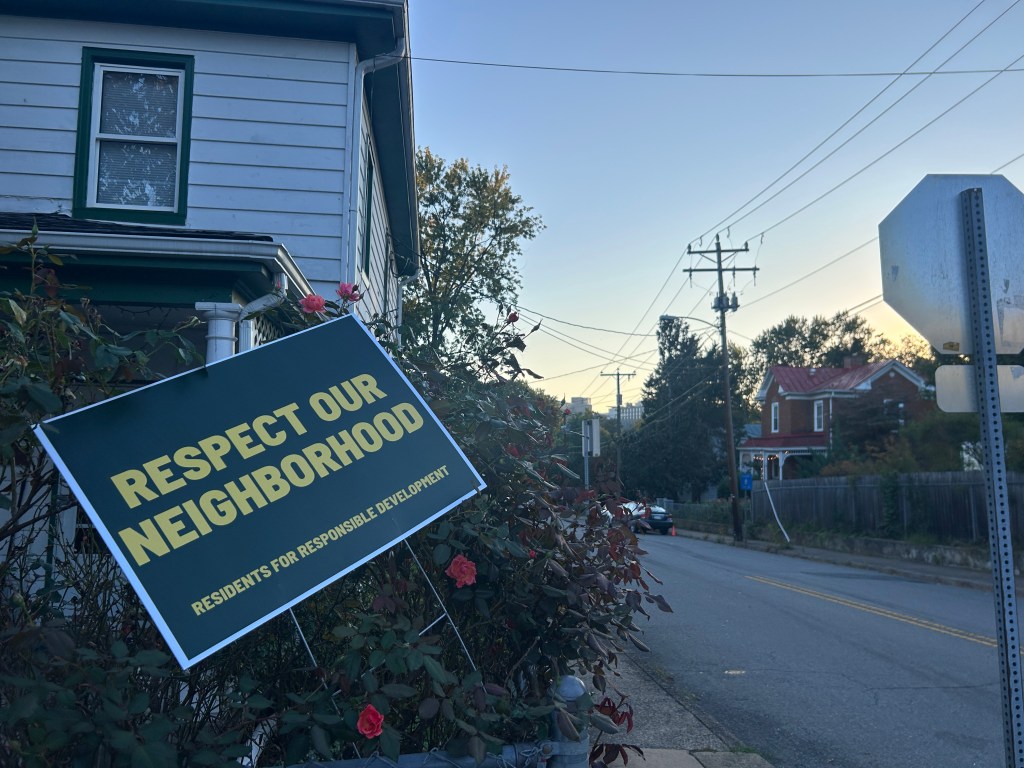
The study showed that when The Standard, The Flats, and The Lark opened up on West Main, hundreds of college students moved out of the 10th and Page and Venable areas and into those buildings.
“When the new high-rise UVA student housing opening up on West Main, it freed up single family home stock in the city in a way that hadn’t been seen in a very long time,” Kim Powell, Chief Operations Officer for Charlottesville City Schools told the Charlottesville Planning Commission in January 2026.
However, Hamilton Lombard, one of the demographers involved with the aforementioned study, said it’s more complicated than that.
U.S. Census data shows that demographics of the families pushed out of those neighborhoods were, in general, not the same as those who moved in when students left, Lombard said. For example, the demographics of the 10th and Page neighborhoods shifted drastically, from 77% Black in 2000 to 34% Black in 2020.
“I don’t know if you’re seeing a lot of these Black families coming back in,” Lombard said.
It’s “a very clear sign of the stereotype of gentrification,” Lombard added. Many families might have moved out due to gentrification pressures. But some might have decided to take advantage of the real estate market, sell their home in the city, and buy something less expensive in one of the surrounding counties, he said.
Lombard’s hunch is that there aren’t many students left in 10th and Page who could be enticed out by the LV Collective building, either because they would prefer to live in a single-family home, or because they can’t afford the rent on a new apartment.
Instead, Lombard thinks that new housing geared toward students would draw them out of older housing for students, such as the developments on Jefferson Park Avenue.
“It will be a different neighborhood that will be offset,” he said.
“This is a tough tradeoff, you’re going to be adding in hundreds of additional units,” which UVA students and city residents alike need, Lombard said. “But then it’s disadvantaging the community that’s lived there for a long time, directly.”
That’s what residents continue to say.
But near the end of the Sept. 17 meeting, residents were left wondering whether the company, or City Council, is actually hearing them.
“Most of the conversation was just an explanation of how we are valuable as a dollar,” Latricia Giles, Executive Director of the Public Housing Association of Residents, said near the end of the meeting. PHAR is a nonprofit organization that supports and advocates for residents of Charlottesville’s public housing communities, including Westhaven.
“The developer wins, but this community lost,” Giles said. “In this community, it’s just loss after loss. This community is at risk. It is dangerously close — actually, we’re here — to the fabric of it being totally different.”