

Beyond the Headlines is our twice-weekly newsletter connecting subscribers directly to our journalists. We add context to major stories, go behind-the-scenes, highlight great work from other local outlets or provide more informal snapshots of our community.
This past Saturday morning, about 75 community members gathered in front of the old Estes IGA grocery store at 501 Cherry Ave. in Charlottesville’s Fifeville neighborhood.
As the sun shone brightly in a cerulean sky, adults sipped hot coffee and kids collected pieces of fruit and cubes of cheese from the catering table.
They were there to celebrate the groundbreaking of the 501 Cherry Ave. project, which will include 71 low-cost apartments (at least five of them for adults with developmental disabilities), a brand-new space for the teen-focused nonprofit Music Resource Center (MRC), and, people hope, a grocery store.
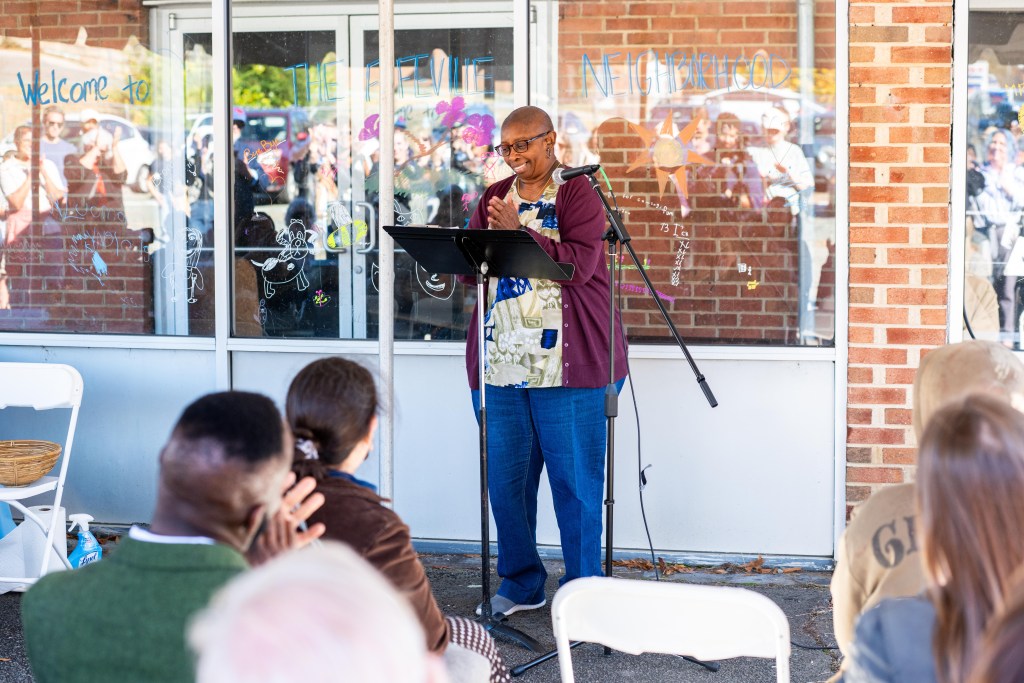
(Well, it was less of a groundbreaking and more of a ceremonial dirt-moving, people joked, since the entire site is covered in asphalt.)
If you’re new to the 501 Cherry Ave. project, I have a wealth of reporting to help you catch up. I started covering it in March of 2023, when local developer Woodard Properties proposed a mixed-use project on the site.
From March 2023: A developer’s proposal could bring a grocery store back to Fifeville
The neighborhood was excited about bringing the MRC back to the neighborhood, and about the possibility of a grocery store, something they’d wanted for years. But they wondered if the proposed housing could be 100% affordable for lower-income households. The neighborhood, which is close to the University of Virginia Medical Center, has been vulnerable to gentrification pressures, and longtime residents have been forced out by rising property values that have led to higher rents and higher property taxes.
The Fifeville Neighborhood Association, led by lifelong city resident Carmelita Wood, asked for a say in Woodard’s plan. And, in a first for Charlottesville, Woodard said yes. The neighborhood association, Woodard Properties, and local nonprofit housing developer Piedmont Housing Alliance (PHA) signed an agreement committing them to the plan of 100% affordable housing, space for the MRC, and a grocery store or some other community-chosen benefit.
That agreement is why I’ve followed this project so closely. As journalists, we report for the present, to keep people informed of what’s going on. But we also report for the historical record. I wanted to document this process and all of its ups and downs, so that when someone looks back on this in 10 years or 100 years, they can see what the community was trying to do and what it eventually accomplished. I wanted to show that this kind of work isn’t easy, but perhaps it can be worth it.
The project faced numerous hurdles: Meeting deadlines and securing financing; Congressional budget cuts that hit multiple local projects; finding a grocery store operator; money (again); and, most recently, losing the grocery store operator.
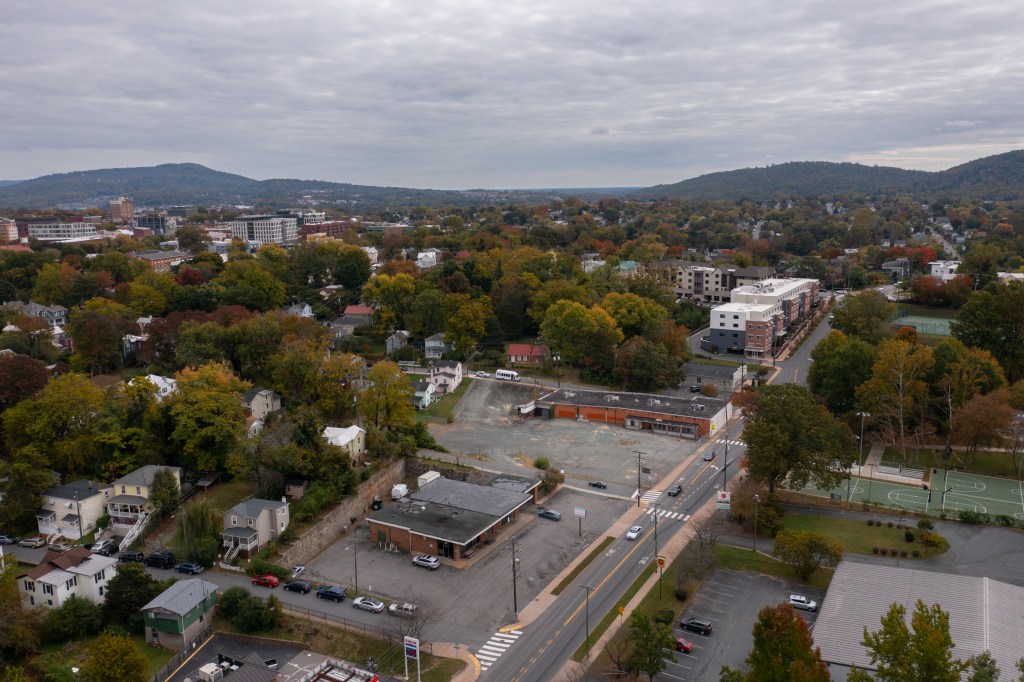
From August: 501 Cherry development in Fifeville moves on without the Charlottesville Food Co-Op
The project partners haven’t given up on the grocery store, though, and plan to make an announcement on that this coming Thursday, Nov. 12, at the monthly Fifeville Neighborhood Association meeting. So, more on that coming soon!
People gave moving remarks at the celebration, and the Monacan Indian Nation, the traditional custodians of the land known today as Charlottesville, sent a letter applauding the project. But Wood’s speech was particularly memorable. Wood, whose family was displaced from their home when the city razed Vinegar Hill in 1964, talked about how she ended up owning her home in Fifeville.
Nearly 30 years ago, she was renting a place in the neighborhood, and her landlords decided to sell. Wood, a single mother, panicked. Usually she’d talk about this with her mother, but her mother had recently passed away. Instead, she spoke with a friend, Rosa Hudson, who worked at PHA at the time. Hudson told Wood about PHA’s down payment assistance program.
Once Wood’s mortgage loan was approved, she started looking at homes. While touring a home on Orangedale Ave., she had a vision of her mother in the hallway.
“This is where you need to be,” her mother said. And that’s where Wood has been ever since.
I was taking notes the entire time, not wanting to miss any detail. When Wood finished, the crowd erupted into applause, and I looked up. Wood, who has for years championed the neighborhood’s needs in meetings with developers and city officials, smiled out at her neighbors, whose faces were reflected in the windows behind her.
I thought about what Wood said back in September 2024, about her fear of not being able to give the neighborhood what it wants at 501 Cherry, and how a lot of that is about to come to fruition. Construction is expected to take 18 months to 2 years, and wrap up in 2028.
I also thought about additional hurdles the neighborhood is facing — likely further gentrification from a planned luxury student housing building.
But in that moment, I thought about what can be accomplished by giving the city’s historically Black neighborhoods a voice in their future, and how Charlottesville can learn a lot about its future from its past.
‘Til next time, thank you for taking the time to learn about your community today.
Erin O’Hare, Neighborhoods Reporter